
40,000 MEALS AT COORS FIELD: A CASE STUDY IN CORPORATE SOCIAL RESPONSIBILITY EVENTS
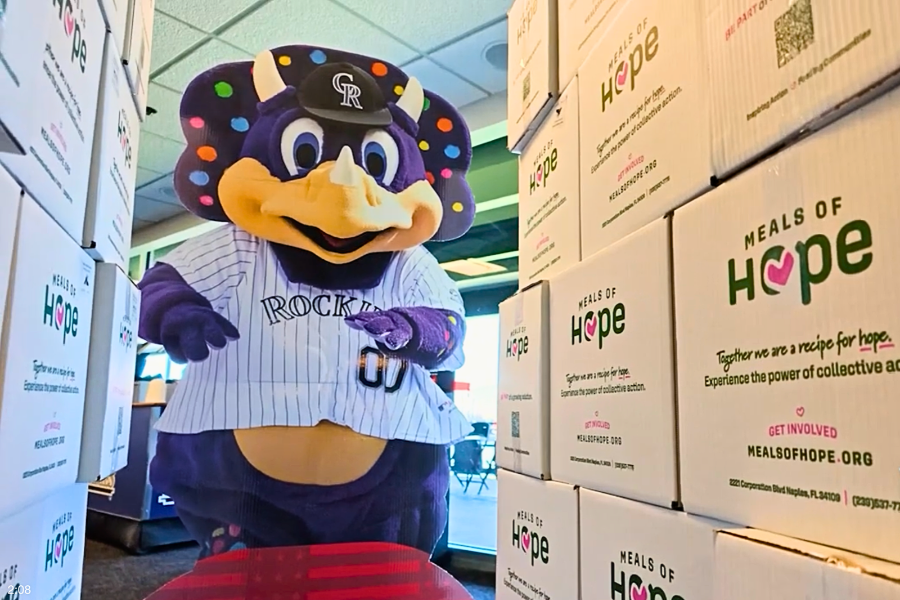
What does an effective corporate social responsibility event look like? This summer at Coors Field, more than 150 volunteers packed 40,000 fortified breakfast meals for Food Bank of the Rockies in a single event organized by Meals of Hope with the Colorado Rockies, King Soopers/City Market, and Swire Coca-Cola. The partners also presented a $50,000 donation to the food bank, and Major League Baseball featured the event in a video released August 17, 2026. The timing mattered. More than 538,000 people in the counties Food Bank of the Rockies serves are food insecure, an increase of 38,000 in a single year, according to Feeding America’s latest Map the Meal Gap data.
MLB.com’s feature on the Colorado Rockies, Meals of Hope, King Soopers/City Market, and Swire Coca-Cola meal packing event for Food Bank of the Rockies.
The Event at a Glance
Location: Coors Field, Denver, Colorado
Partners: Colorado Rockies, Meals of Hope, King Soopers/City Market, Swire Coca-Cola
Beneficiary: Food Bank of the Rockies
Volunteers: More than 150
Meals packed: 40,000 fortified oatmeal meals with diced apples and cinnamon
Donation: $50,000 to Food Bank of the Rockies
Distribution area: Denver metro
Media coverage: MLB.com video feature, August 17, 2026
INSIDE THE COORS FIELD MEAL PACKING EVENT
Randall Birchall of Meals of Hope organized the event, turning a section of Coors Field into a production floor of packing stations. Volunteers filled, weighed, and sealed pouches of fortified oatmeal, then boxed the finished meals for transport to Food Bank of the Rockies. The partners chose a breakfast meal to give children a healthy start to the day, and every meal stays in the Denver metro area.
The $50,000 donation extends the event’s reach well beyond the packing floor. Food Bank of the Rockies reports that each dollar donated provides enough food for three meals, which puts the contribution’s purchasing power at roughly 150,000 additional meals by the food bank’s own measure.
WHY COMPANIES CHOOSE MEAL PACKING FOR CORPORATE SOCIAL RESPONSIBILITY
Corporate volunteer programs often run into the same obstacles. Skilled volunteering excludes employees without the right expertise, off-site service days take heavy coordination, and many activities end without a result anyone can report. Meal packing works around all three. It requires no experience, the entire team works in one room toward one number, and the event ends with a meal count, a volunteer count, and a named beneficiary that can go straight into a CSR or impact report.
That reportability is why meal packing has become a popular choice for employee engagement. Employees see the meal count climb while they work, and teams that rarely collaborate share a goal for a few hours. Volunteering as a team building activity works best when the task is simple enough for everyone to join and the outcome is concrete, and meal packing meets both conditions.
The format also fits corporate social responsibility in events such as conferences, sales kickoffs, and annual meetings. A packing session can run in a ballroom or exhibit hall between general sessions, giving planners a service component that produces a documented result without requiring attendees to leave the venue.
HOW A CORPORATE MEAL PACKING EVENT WORKS
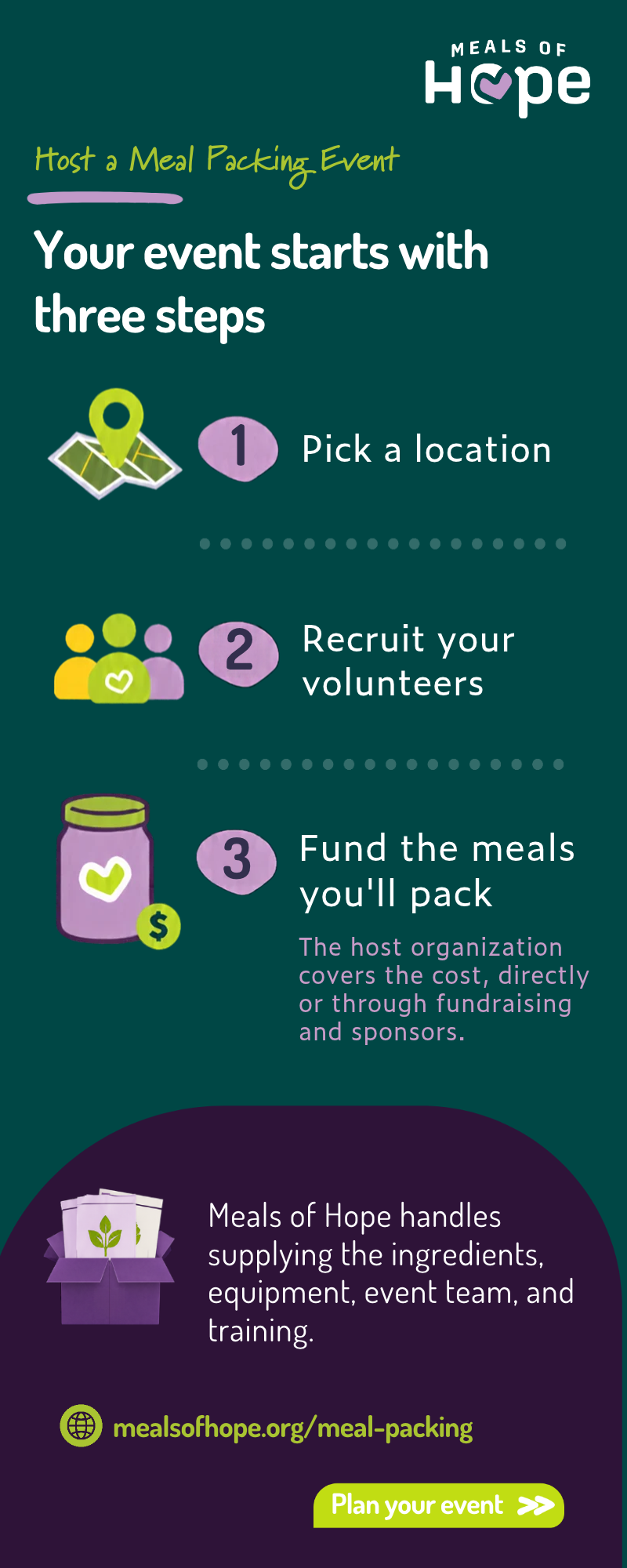
Every event divides the work between two parties. The host organization provides the venue, the volunteers, and sponsorship for the meal ingredients. Meals of Hope provides the ingredients, equipment, event planning, setup, volunteer training, on-site facilitation, and cleanup.
A typical event runs about two hours and can be sized for anywhere from 10 to 2,000 volunteers. For planning, each volunteer packs around 60 bags in two hours, or roughly 350 meals per person. A 60-by-40-foot space holds 10 packing stations and 100 to 125 volunteers, enough to pack about 50,000 meals. Gyms, conference centers, warehouses, and event venues all work.
Details on scheduling, venue requirements and group sizes are on the Meals of Hope meal packing events page.
WHERE THE MEALS GO AFTER THE EVENT
Food Bank of the Rockies is the largest hunger relief organization in the Rocky Mountain region, serving 33 Colorado counties and all of Wyoming. The need among children is especially acute: about 157,500 kids in its service area, or 1 in 5, are food insecure.
Federal nutrition programs reach only part of that population. Food Bank of the Rockies estimates that roughly half of food-insecure Coloradans don’t qualify for programs like SNAP and depend on food banks instead. The same gap exists nationally, where about 25 million people, nearly half of everyone experiencing food insecurity, earn too much to qualify for federal nutrition assistance, according to Feeding America’s 2026 Map the Meal Gap study.
Packed meals help food banks serve that population on their own schedule. Shelf-stable food can be stored and distributed when and where it is needed, so a two-hour corporate event can keep supplying mobile pantries and partner agencies for weeks afterward.
“Nearly half of the people facing food insecurity in this country earn too much to qualify for SNAP, and food banks are absorbing that demand right now,” said Steve Popper, Founder and CEO of Meals of Hope. “A packing event lets a company or a ballclub add real supply to the charitable food system in a single day, while the food bank decides where it goes. That division of labor is why the model works the same way in Denver as it does in Naples.”
WHAT MADE THE ROCKIES PARTNERSHIP WORK
Each partner contributed something the others couldn’t. The Colorado Rockies provided the venue, the convening power, and a platform that drew national coverage. King Soopers/City Market and Swire Coca-Cola brought corporate support and volunteers. Meals of Hope ran the packing operation, and Food Bank of the Rockies supplied the distribution network that turns 40,000 meals into food on local tables.
That division of roles is the lesson for other organizations. A company does not need to build a hunger relief program, manage food logistics, or find recipients on its own. It needs a clear role inside a structure where each of those jobs already belongs to someone with the expertise to do it. Every partner also leaves with something specific: sponsors get a documented outcome, the team gets a visible community presence, and the food bank gets both supply and funding.
HOW THE PACKING PARTNER MODEL BRINGS EVENTS TO LOCAL MARKETS
The Coors Field event grew out of relationships built locally over time. Meals of Hope expands through its Packing Partner program, which places local operators in markets across the country to build ongoing relationships with businesses, sports organizations, schools, civic groups, and food banks in their region.
Colorado shows how that plays out. Meals of Hope Colorado held its first packing event in May 2023 at Lakewood United Methodist Church. That summer, Medtronic sponsored a four-day packing marathon for its Boulder staff that produced more than 100,000 meals for Community Food Share, Boulder County’s main food bank. Three years of those relationships made a partnership with a Major League Baseball club possible.
The model traces back to Naples, Florida, where Meals of Hope held its first packing event in 2007 and roughly 500 volunteers packed more than 135,000 meals. Meals of Hope volunteers have since packed more than 100 million meals nationwide, while the organization runs more than 26 food distribution locations across Collier and Lee Counties. That daily pantry work gives the national program firsthand knowledge of what families need and how food moves from a warehouse to a kitchen table.
HOW TO PLAN A CORPORATE VOLUNTEER EVENT LIKE THIS ONE
Organizations that want to replicate the Coors Field model can work through five decisions in order:
- Set the goal. Choose a meal target and estimate headcount. At roughly 350 meals per volunteer, 100 employees can pack about 35,000 meals.
- Choose the setting. Decide whether the event stands alone as a volunteer day or runs inside a conference, meeting, or partner activation.
- Secure sponsorship. Ingredient sponsorship funds the meals. Co-sponsors, vendors, or partner companies can share the cost.
- Name the beneficiary. Pick the food bank or pantry network that will receive the meals, ideally one serving the communities where your employees and customers live.
- Plan how you’ll share it. Assign someone to photos, a partner announcement, and internal communications so the result reaches employees, customers and CSR report.
Meals of Hope can help with every step. To bring this model to your company, conference or community, host a meal packing event with Meals of Hope.
FREQUENTLY ASKED QUESTIONS
- What is a corporate meal packing event?
A corporate meal packing event is a hands-on volunteer activity in which employees assemble shelf-stable meals at packing stations, usually in about two hours, and the finished meals go to a local food bank or hunger relief organization. At the Colorado Rockies event at Coors Field, more than 150 volunteers packed 40,000 fortified meals for Food Bank of the Rockies. - How much does a corporate meal packing event cost?
The cost of a Meals of Hope event depends mainly on how many meals your group plans to pack, because the host organization sponsors the meal ingredients. Meals of Hope builds a quote around your meal goal and group size, and equipment, planning, setup, training, facilitation, and cleanup are all included. - Can a meal packing event be part of a conference or company meeting?
Yes. Meals of Hope can set up packing stations in a ballroom, exhibit hall, or other large room, so attendees take part without leaving the venue. A 60-by-40-foot space fits 10 stations and 100 to 125 volunteers, enough to pack about 50,000 meals in a single session. - Do volunteers need experience to pack meals?
No. Meals of Hope provides all the guidance volunteers need, either on site or through videos, Zoom calls, and written materials before the event, so first-time volunteers can start packing within minutes. - Is there an age limit for Meals of Hope meal packing events?
No. Meals of Hope meal packing events have no age limit, and volunteers of all ages and abilities take part, from young children to senior citizens. That makes the events a good fit for family volunteer days, school groups, and companies that invite employees’ families. - Can a company choose which food bank receives its meals?
Yes. Companies work with Meals of Hope to direct their meals to a food bank or pantry network in the community they choose, often where their employees and customers live. At Coors Field, the Colorado Rockies and their partners directed all 40,000 meals to Food Bank of the Rockies for distribution in the Denver metro area. - How do companies measure the impact of a meal packing event?
Every Meals of Hope event produces a final meal count, a volunteer count, and a named beneficiary organization, which companies can use in CSR reports, ESG disclosures, employee communications, and partner announcements. Each meal is fortified with 21 vitamins and minerals, so companies can also describe the nutritional value of what their team packed. - Can a company sponsor a meal packing event without providing volunteers?
Yes. Businesses can fund the ingredients for Meals of Hope events hosted by schools, civic clubs, faith communities, or other organizations. The sponsor receives the same documented outcome, including the meal count and beneficiary, without organizing volunteers of its own. - Can a company hold meal packing events in more than one city?
Yes. Meals of Hope runs events nationwide, and local Packing Partners organize events in their own markets. That allows a company with multiple offices to run coordinated events in different cities, with each event’s meals staying in that community. - What is a Meals of Hope Packing Partner?
A Packing Partner is a local operator under the Meals of Hope franchise model who organizes meal packing events and builds ongoing relationships with businesses, sports organizations, schools, civic groups, and food banks in a specific territory. The Colorado Packing Partner program, which began hosting events in 2023, laid the groundwork for the Colorado Rockies event at Coors Field. - How is a meal packing event different from a food drive?
A food drive collects donated items that vary in type, quantity, and nutritional value, and food banks have to sort them before distribution. A Meals of Hope meal packing event produces a set number of standardized, fortified meals in about two hours, ready for a food bank to store and distribute right away. - How do I schedule a corporate meal packing event?
Start at mealsofhope.org/meal-packing to share your group size, preferred date, location, and meal goal with the Meals of Hope team. Meals of Hope then handles planning, ingredients, equipment, setup, and on-site facilitation, and your team shows up ready to pack.