
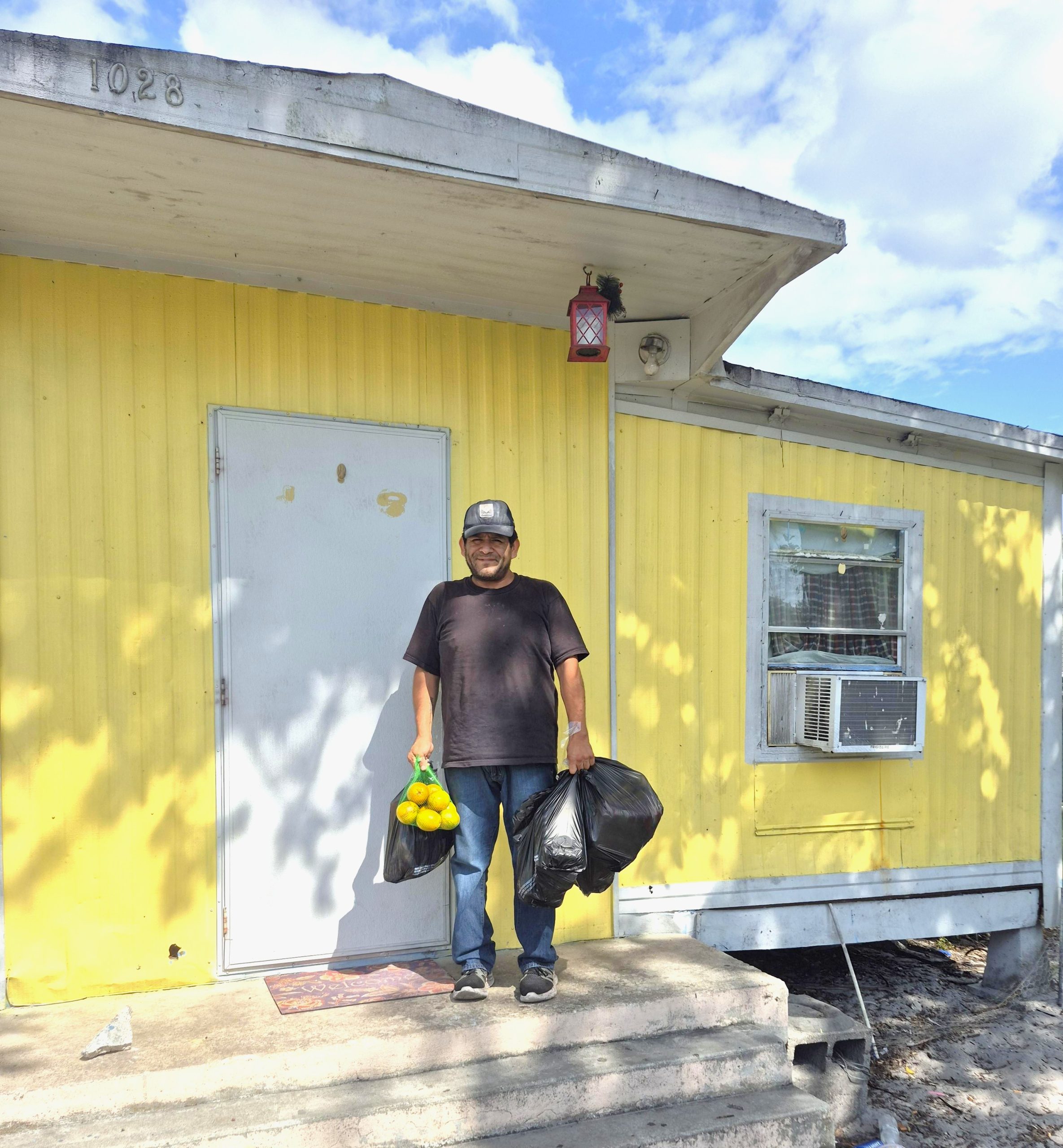
There is a gap that most food assistance programs were never built to close. It is not a gap in food supply or funding or community generosity. It is a gap in access, specifically the physical ability to get to the food in the first place.
For a family without reliable transportation in Immokalee, getting to a pantry can mean arranging a ride, missing work, or simply going without. For an elderly resident in Golden Gate’s rural areas, a mobility challenge can make a weekly food pickup feel impossible, regardless of how much food is available a few miles away.
Meals of Hope built its Home Delivery Initiative to close that gap. It is one of the most targeted approaches to home food delivery in Collier County, and it is already reaching families that no other program in Southwest Florida was built to serve.
WHAT THE HOME DELIVERY INITIATIVE IS
The Home Delivery Initiative is a direct-to-door food program that brings fresh produce, canned and dry goods, and frozen meat or eggs to families who face transportation or mobility barriers that prevent them from visiting a pantry or mobile food distribution site.
The program currently serves approximately 200 families in the Immokalee area and is actively expanding into the Golden Gate rural area with a goal of reaching 75 families to start. Each delivery brings a meaningful supply of food directly to households that might otherwise have no consistent access to fresh groceries.
A PROBLEM BIGGER THAN MOST PEOPLE REALIZE
Transportation is one of the most underexamined barriers in the fight against food insecurity. According to Feeding Florida, 69 percent of food bank-assisted households have had to choose between food and transportation. For families in rural Collier County, where public transit is limited, and distances between neighborhoods and distribution sites can be significant, that choice is made every single week.
Feeding Florida has noted that long distances, limited transportation, and fewer grocery stores can turn a simple grocery trip into a real challenge for families living in rural areas. Golden Gate and Immokalee represent exactly that reality. Both communities face geographic and economic conditions that make food access genuinely difficult for a meaningful portion of their residents.
The research on home delivery as a solution is compelling. A MacArthur Foundation-supported pilot program delivering groceries to residents facing physical and cost barriers found that 22 percent of participants were no longer food insecure after joining, 59 percent found it easier to access healthy food, and 43 percent experienced lower stress around food access. Removing the barrier of transportation does not just put food in someone’s hands. It changes how they experience food security entirely.
Research from Amazon’s food bank delivery program found that home food delivery saves families an average of $100 monthly in time and travel costs, a figure that reflects how significant the barrier of transportation truly is for families already stretched thin.
WHY MEALS OF HOPE BUILT THIS
Stephen Popper, President and CEO of Meals of Hope, has spent years watching hunger in Southwest Florida evolve. The families Meals of Hope serves are not who most people picture when they think about food insecurity. They are working families, people holding down jobs and still coming up short at the end of the month. They are elderly residents on fixed incomes. They are parents navigating a landscape where grocery prices keep climbing and federal food assistance programs keep shrinking.
When Meals of Hope heard from families in Immokalee that getting to a pantry was itself a barrier, the organization did not add it to a list of challenges to address someday. It built a program.
That responsiveness is at the core of how Meals of Hope operates across Southwest Florida. The same instinct that led to the choice-based Your Neighborhood Pantry mobile food pantry and the Baby Pantry in Immokalee led to the Home Delivery Initiative. Meals of Hope listens to what the community says it needs and then builds a practical answer.
PART OF A LARGER SYSTEM BUILT FOR SOUTHWEST FLORIDA
The Home Delivery Initiative is one piece of a broader hunger relief network that Meals of Hope has built across Southwest Florida. Operating out of an 18,000-square-foot distribution facility in Naples, the organization runs 20 neighborhood food pantries, a regional food distribution hub that moves fresh produce, proteins, and dairy across the region, a mobile choice food pantry serving close to 100 families every week, and community meal packing events that bring volunteers together around a shared purpose.
“Every program we build starts with a question,” said Stephen Popper, President and CEO of Meals of Hope. “Who are we not reaching, and why? The Home Delivery Initiative is our answer for the families in Immokalee and Golden Gate who face barriers that no pantry or mobile unit can solve on its own.”
Together, these programs address hunger from multiple directions. The Naples warehouse addresses scale. The neighborhood pantries address proximity. The mobile food pantry addresses neighborhoods where a fixed location does not reach. And the Home Delivery Initiative addresses the families that none of the above can reach because getting there is the barrier.
Immokalee, a community of roughly 28,000 residents with a median household income of just over $40,000, has long faced some of the most persistent food insecurity challenges in Collier County. Meals of Hope has maintained a presence there for years. The Home Delivery Initiative deepens that commitment by reaching into the households that even an active pantry presence cannot serve.
WHAT THIS MOMENT DEMANDS
The need behind the Home Delivery Initiative is not easing. Grocery prices are projected to rise between 3.1 and 3.6 percent in 2026 according to the USDA Economic Research Service. Federal cuts to the Emergency Food Assistance Program and proposed changes to SNAP are increasing pressure on local food organizations across Southwest Florida and the country. More families in Collier County are turning to community programs for support, and more of those families face barriers that go beyond simply not having enough food.
Meals of Hope is meeting that reality with a program designed to reach families where they are, literally at their door.
HOW YOU CAN HELP
The Home Delivery Initiative runs on community support. Every donation helps Meals of Hope purchase food, cover delivery operations, and expand the program into new areas across Southwest Florida where the need is real and growing.
You can also volunteer with Meals of Hope to help support hunger relief programs across Southwest Florida, from pantry operations to meal packing events that serve thousands of families every week.
To support the Home Delivery Initiative and the full scope of Meals of Hope’s hunger relief work across Southwest Florida and Collier County, visit mealsofhope.org.
Donate today and help make sure that no family in Southwest Florida goes without food simply because they could not get there.
FREQUENTLY ASKED QUESTIONS
What programs does Meals of Hope operate across Southwest Florida? Meals of Hope is the largest food pantry provider in Southwest Florida, operating 20 neighborhood food pantries, an 18,000-square-foot regional food distribution hub in Naples, a mobile choice food pantry serving close to 100 families every week, a Home Delivery Initiative bringing food directly to families who cannot get to a pantry, and community meal packing events that bring volunteers together around a shared purpose. Together these programs serve thousands of families across Collier County and the broader Southwest Florida region every week.
Does Meals of Hope deliver food to homes? Yes. Meals of Hope’s Home Delivery Initiative brings fresh produce, canned and dry goods, and frozen meat or eggs directly to families in Southwest Florida who face transportation or mobility barriers that prevent them from visiting a food pantry.
Who qualifies for the Meals of Hope Home Delivery Initiative? The program serves families who are unable to visit a Meals of Hope pantry or mobile food distribution site due to transportation or mobility challenges. It currently serves families in the Immokalee area and is expanding into the Golden Gate rural area of Collier County.
Where does Meals of Hope home delivery operate? The Home Delivery Initiative currently serves 178 families in the Immokalee area of Collier County, Florida, with expansion underway into the Golden Gate rural area, targeting 75 families to start.
What food does Meals of Hope deliver? Each delivery includes fresh produce, canned and dry goods, and frozen meat or eggs, providing families with a meaningful supply of nutritious groceries each week.
How do I get food delivered to my home in Collier County? To learn more about the Home Delivery Initiative and find out if your family qualifies, visit mealsofhope.org.
Is Meals of Hope the only organization doing home food delivery in Collier County? Meals of Hope is the only organization in Collier County delivering groceries directly to families at home. Other home delivery programs in the region focus on prepared meals for specific populations. Meals of Hope’s Home Delivery Initiative brings fresh produce, proteins, and pantry staples to families in Immokalee and Golden Gate who face transportation or mobility barriers that prevent them from reaching a pantry or mobile distribution site.
How can I volunteer with Meals of Hope in Southwest Florida? Meals of Hope relies on volunteers to keep its programs running across Southwest Florida. Volunteers can participate in community meal packing events, support neighborhood food pantry operations, and help with food distribution across the region. Volunteering with Meals of Hope is a direct, hands-on way to fight hunger in your own community. No experience is needed. Get involved here to find volunteer opportunities and to sign up.
How can I donate to Meals of Hope and why does it matter? Meals of Hope depends on donations to purchase fresh produce, proteins, dairy, and pantry staples for the thousands of families it serves every week across Southwest Florida. Federal food assistance programs are facing cuts and grocery prices continue to rise, meaning more families in Collier County are turning to local organizations for support at the same moment those organizations need more resources to keep up. Every donation directly funds food, delivery operations, pantry programs, and the continued expansion of initiatives like the Home Delivery Initiative into new communities. Make a one time gift or a monthly donation here.