Jun 16, 2026 | Featured, In the News, Meals of Hope News, Uncategorized
There is a gap that most food assistance programs were never built to close. It is not a gap in food supply or funding or community generosity. It is a gap in access, specifically the physical ability to get to the food in the first place.
For a family without reliable transportation in Immokalee, getting to a pantry can mean arranging a ride, missing work, or simply going without. For an elderly resident in Golden Gate’s rural areas, a mobility challenge can make a weekly food pickup feel impossible, regardless of how much food is available a few miles away.
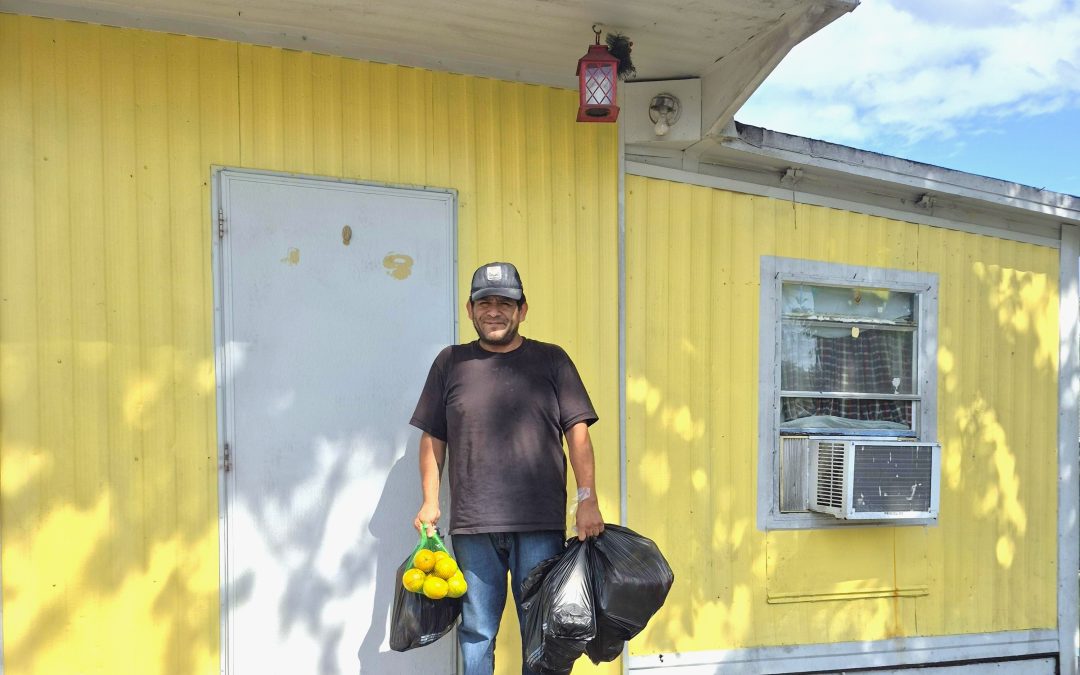
Meals of Hope built its Home Delivery Initiative to close that gap. It is one of the most targeted approaches to home food delivery in Collier County, and it is already reaching families that no other program in Southwest Florida was built to serve.
WHAT THE HOME DELIVERY INITIATIVE IS
The Home Delivery Initiative is a direct-to-door food program that brings fresh produce, canned and dry goods, and frozen meat or eggs to families who face transportation or mobility barriers that prevent them from visiting a pantry or mobile food distribution site.
The program currently serves approximately 200 families in the Immokalee area and is actively expanding into the Golden Gate rural area with a goal of reaching 75 families to start. Each delivery brings a meaningful supply of food directly to households that might otherwise have no consistent access to fresh groceries.
A PROBLEM BIGGER THAN MOST PEOPLE REALIZE
Transportation is one of the most underexamined barriers in the fight against food insecurity. According to Feeding Florida, 69 percent of food bank-assisted households have had to choose between food and transportation. For families in rural Collier County, where public transit is limited, and distances between neighborhoods and distribution sites can be significant, that choice is made every single week.
Feeding Florida has noted that long distances, limited transportation, and fewer grocery stores can turn a simple grocery trip into a real challenge for families living in rural areas. Golden Gate and Immokalee represent exactly that reality. Both communities face geographic and economic conditions that make food access genuinely difficult for a meaningful portion of their residents.
The research on home delivery as a solution is compelling. A MacArthur Foundation-supported pilot program delivering groceries to residents facing physical and cost barriers found that 22 percent of participants were no longer food insecure after joining, 59 percent found it easier to access healthy food, and 43 percent experienced lower stress around food access. Removing the barrier of transportation does not just put food in someone’s hands. It changes how they experience food security entirely.
Research from Amazon’s food bank delivery program found that home food delivery saves families an average of $100 monthly in time and travel costs, a figure that reflects how significant the barrier of transportation truly is for families already stretched thin.
WHY MEALS OF HOPE BUILT THIS
Stephen Popper, President and CEO of Meals of Hope, has spent years watching hunger in Southwest Florida evolve. The families Meals of Hope serves are not who most people picture when they think about food insecurity. They are working families, people holding down jobs and still coming up short at the end of the month. They are elderly residents on fixed incomes. They are parents navigating a landscape where grocery prices keep climbing and federal food assistance programs keep shrinking.
When Meals of Hope heard from families in Immokalee that getting to a pantry was itself a barrier, the organization did not add it to a list of challenges to address someday. It built a program.
That responsiveness is at the core of how Meals of Hope operates across Southwest Florida. The same instinct that led to the choice-based Your Neighborhood Pantry mobile food pantry and the Baby Pantry in Immokalee led to the Home Delivery Initiative. Meals of Hope listens to what the community says it needs and then builds a practical answer.
PART OF A LARGER SYSTEM BUILT FOR SOUTHWEST FLORIDA
The Home Delivery Initiative is one piece of a broader hunger relief network that Meals of Hope has built across Southwest Florida. Operating out of an 18,000-square-foot distribution facility in Naples, the organization runs 20 neighborhood food pantries, a regional food distribution hub that moves fresh produce, proteins, and dairy across the region, a mobile choice food pantry serving close to 100 families every week, and community meal packing events that bring volunteers together around a shared purpose.
“Every program we build starts with a question,” said Stephen Popper, President and CEO of Meals of Hope. “Who are we not reaching, and why? The Home Delivery Initiative is our answer for the families in Immokalee and Golden Gate who face barriers that no pantry or mobile unit can solve on its own.”
Together, these programs address hunger from multiple directions. The Naples warehouse addresses scale. The neighborhood pantries address proximity. The mobile food pantry addresses neighborhoods where a fixed location does not reach. And the Home Delivery Initiative addresses the families that none of the above can reach because getting there is the barrier.
Immokalee, a community of roughly 28,000 residents with a median household income of just over $40,000, has long faced some of the most persistent food insecurity challenges in Collier County. Meals of Hope has maintained a presence there for years. The Home Delivery Initiative deepens that commitment by reaching into the households that even an active pantry presence cannot serve.
WHAT THIS MOMENT DEMANDS
The need behind the Home Delivery Initiative is not easing. Grocery prices are projected to rise between 3.1 and 3.6 percent in 2026 according to the USDA Economic Research Service. Federal cuts to the Emergency Food Assistance Program and proposed changes to SNAP are increasing pressure on local food organizations across Southwest Florida and the country. More families in Collier County are turning to community programs for support, and more of those families face barriers that go beyond simply not having enough food.
Meals of Hope is meeting that reality with a program designed to reach families where they are, literally at their door.
HOW YOU CAN HELP
The Home Delivery Initiative runs on community support. Every donation helps Meals of Hope purchase food, cover delivery operations, and expand the program into new areas across Southwest Florida where the need is real and growing.
You can also volunteer with Meals of Hope to help support hunger relief programs across Southwest Florida, from pantry operations to meal packing events that serve thousands of families every week.
To support the Home Delivery Initiative and the full scope of Meals of Hope’s hunger relief work across Southwest Florida and Collier County, visit mealsofhope.org.
Donate today and help make sure that no family in Southwest Florida goes without food simply because they could not get there.
FREQUENTLY ASKED QUESTIONS
What programs does Meals of Hope operate across Southwest Florida? Meals of Hope is the largest food pantry provider in Southwest Florida, operating 20 neighborhood food pantries, an 18,000-square-foot regional food distribution hub in Naples, a mobile choice food pantry serving close to 100 families every week, a Home Delivery Initiative bringing food directly to families who cannot get to a pantry, and community meal packing events that bring volunteers together around a shared purpose. Together these programs serve thousands of families across Collier County and the broader Southwest Florida region every week.
Does Meals of Hope deliver food to homes? Yes. Meals of Hope’s Home Delivery Initiative brings fresh produce, canned and dry goods, and frozen meat or eggs directly to families in Southwest Florida who face transportation or mobility barriers that prevent them from visiting a food pantry.
Who qualifies for the Meals of Hope Home Delivery Initiative? The program serves families who are unable to visit a Meals of Hope pantry or mobile food distribution site due to transportation or mobility challenges. It currently serves families in the Immokalee area and is expanding into the Golden Gate rural area of Collier County.
Where does Meals of Hope home delivery operate? The Home Delivery Initiative currently serves 178 families in the Immokalee area of Collier County, Florida, with expansion underway into the Golden Gate rural area, targeting 75 families to start.
What food does Meals of Hope deliver? Each delivery includes fresh produce, canned and dry goods, and frozen meat or eggs, providing families with a meaningful supply of nutritious groceries each week.
How do I get food delivered to my home in Collier County? To learn more about the Home Delivery Initiative and find out if your family qualifies, visit mealsofhope.org.
Is Meals of Hope the only organization doing home food delivery in Collier County? Meals of Hope is the only organization in Collier County delivering groceries directly to families at home. Other home delivery programs in the region focus on prepared meals for specific populations. Meals of Hope’s Home Delivery Initiative brings fresh produce, proteins, and pantry staples to families in Immokalee and Golden Gate who face transportation or mobility barriers that prevent them from reaching a pantry or mobile distribution site.
How can I volunteer with Meals of Hope in Southwest Florida? Meals of Hope relies on volunteers to keep its programs running across Southwest Florida. Volunteers can participate in community meal packing events, support neighborhood food pantry operations, and help with food distribution across the region. Volunteering with Meals of Hope is a direct, hands-on way to fight hunger in your own community. No experience is needed. Get involved here to find volunteer opportunities and to sign up.
How can I donate to Meals of Hope and why does it matter? Meals of Hope depends on donations to purchase fresh produce, proteins, dairy, and pantry staples for the thousands of families it serves every week across Southwest Florida. Federal food assistance programs are facing cuts and grocery prices continue to rise, meaning more families in Collier County are turning to local organizations for support at the same moment those organizations need more resources to keep up. Every donation directly funds food, delivery operations, pantry programs, and the continued expansion of initiatives like the Home Delivery Initiative into new communities. Make a one time gift or a monthly donation here.
Jun 5, 2026 | Uncategorized
Nearly 1 in 5 children in Collier County lives with food insecurity, meaning they do not have reliable access to enough food. That is a rate of 19.4 percent, according to Map the Meal Gap data published by Feeding America, the nation’s largest hunger relief network, in a county that many people associate with golf courses and waterfront luxury. The gap between that perception and the reality facing tens of thousands of Collier County residents is exactly the gap Meals of Hope has spent years working to close.
On April 7, that work took a new form.
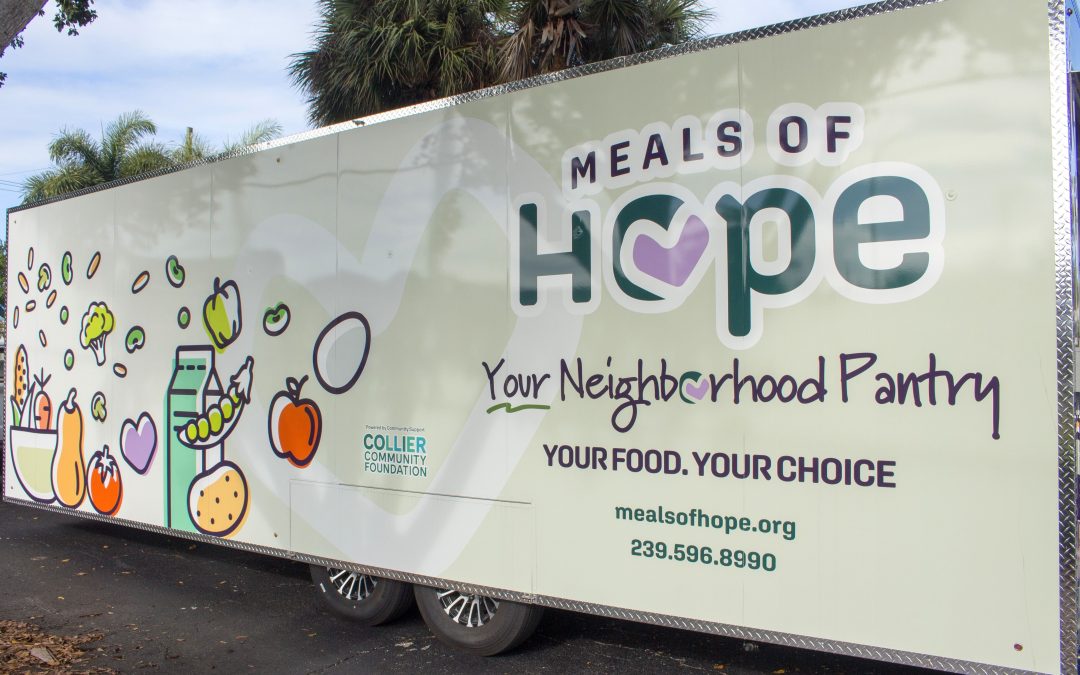
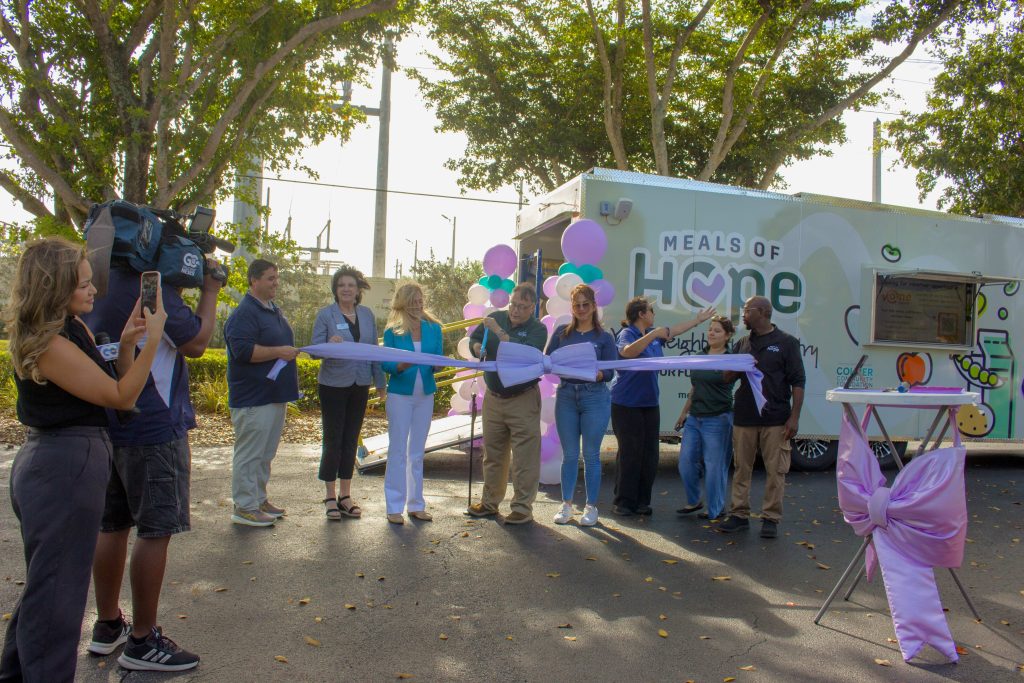
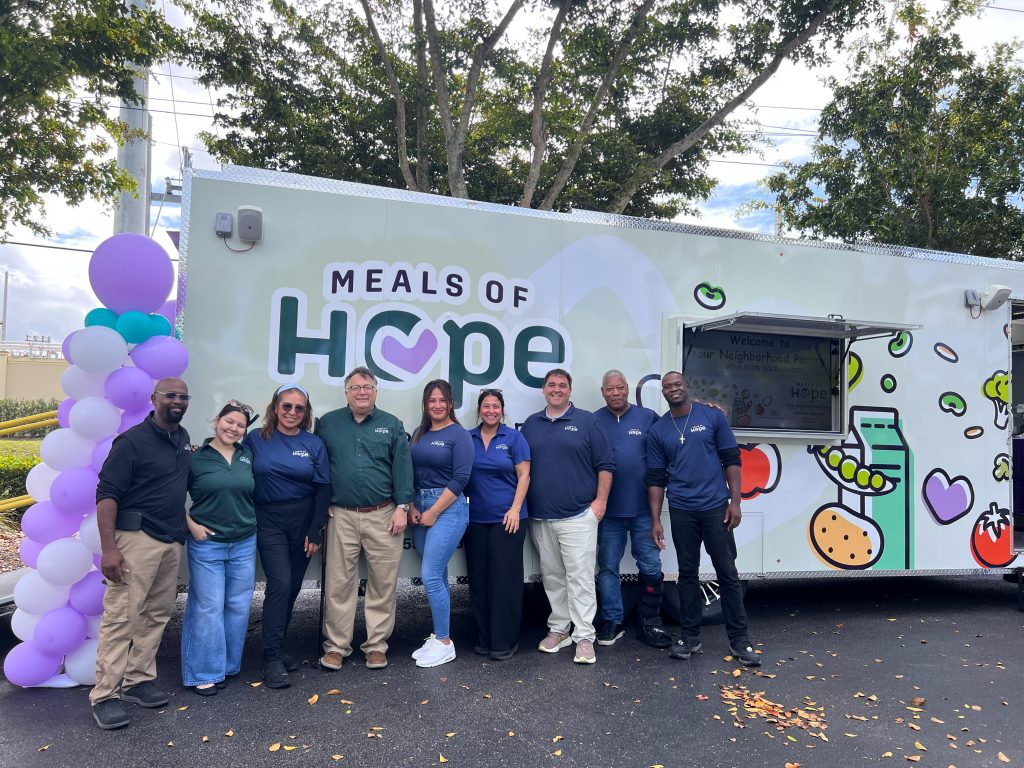
Meals of Hope launched Your Neighborhood Pantry, a 26-foot mobile food pantry in Naples, Florida, serving the River Park community every Monday. The program made its launch at the River Park Community Center, and the response to the choice pantry from the neighborhood was immediate.
WHAT YOUR NEIGHBORHOOD PANTRY IS AND HOW IT WORKS
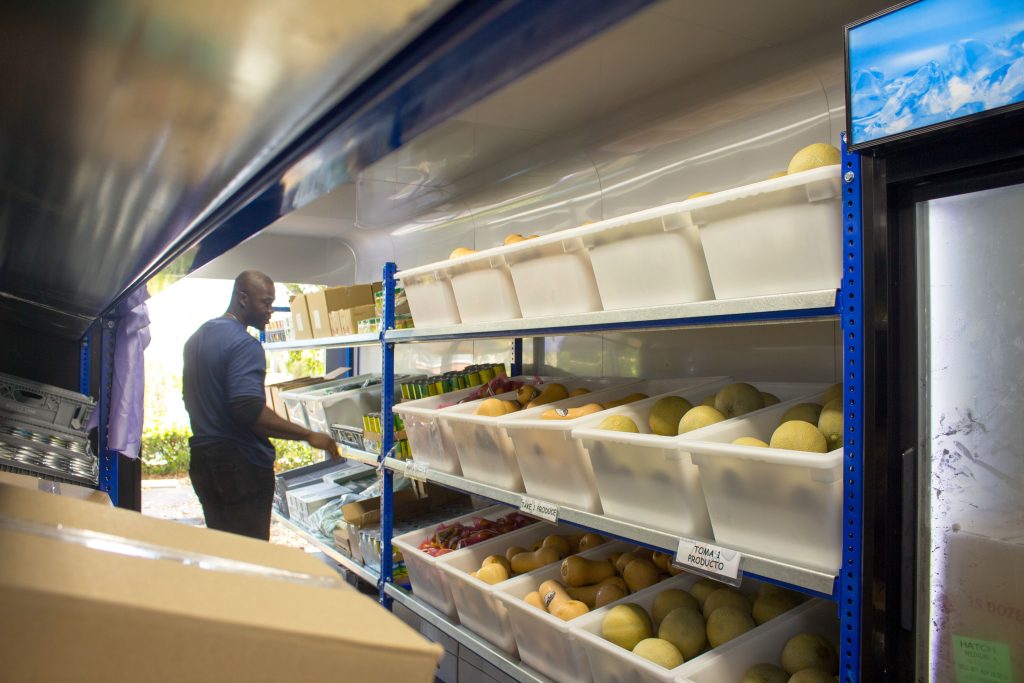
Your Neighborhood Pantry is a mobile food pantry in Naples, Florida, designed to function like a small neighborhood grocery store. Families walk through the unit and select what they need from shelves stocked with fresh produce, dairy, proteins, eggs, canned goods, rice, cereal, and more. There are no pre-packed boxes. Residents choose for themselves, which reduces waste, supports healthier eating, and preserves the dignity that a traditional food distribution model often does not.
The pantry is currently serving close to 100 families per week at the River Park Community Center, with capacity to reach up to 160 families as the program grows.
Stephen Popper is the president and CEO of Meals of Hope, a Naples-based hunger relief nonprofit that operates 19 food pantries across Southwest Florida and runs one of the region’s most active food distribution networks. He has watched the face of hunger in Collier County change over the years, and he is direct about what it actually looks like. “Hunger is a silent epidemic, not just in Southwest Florida, but all over the country,” he told Gulf Coast News. “The people we are serving, very few are homeless or unemployed. We are really working with the underemployed. These are people working hard who just cannot make ends meet.”
For families who came through on launch day, the relief was tangible. “I got eggs, cantaloupe, tuna fish, macaroni and cheese, and some other stuff,” Naples resident Lewis Arnold told Gulf Coast News. Another neighbor, Alberto, connected the program directly to the financial pressure his household is feeling: “Things are tough right now. Prices have gone up, and every time you can get something for your home, you feel better.”
A RETURN TO RIVER PARK
River Park is not a new service area for Meals of Hope. The organization had a history of showing up in this neighborhood before logistical limitations made it difficult to sustain. The Your Neighborhood Pantry mobile unit changes that. “We used to come to River Park years ago, and we would have over 100 families that come,” Popper told WINK News. “But honestly, the parking is tight. We bring our big trucks. Now that we have this, we are so happy to be back in this community, serving really an area of great need.”
The mobile food pantry format solves what fixed-location distribution could not. It goes to the neighborhood. It fits the space. And it gives residents a reason to show up every week.
WHY FOOD INSECURITY IN COLLIER COUNTY IS GETTING HARDER TO IGNORE
Alberto’s comment about rising prices reflects a national reality landing hard on Southwest Florida families. Grocery prices across the country are projected to rise between 3.1 and 3.6 percent in 2026, according to the USDA Economic Research Service, with meat prices expected to climb nearly 10 percent. For households already stretched between rent, transportation, and basic expenses, those increases push food further down the list of things people can afford. Rising fuel costs compound that pressure directly. Getting to a grocery store costs more than it did a year ago, and for families without reliable transportation in Collier County, that cost is not just financial. It is a barrier that keeps them from the food they need altogether.
Collier County is among the top three most expensive counties in Florida, and more than 53,000 households are considered cost-burdened, spending more than 30 percent of their monthly income on housing alone. When housing takes that much, groceries become a choice rather than a given.
At the federal level, the safety net is contracting at the same moment the need is expanding. The federal government recently cut $500 million from the Emergency Food Assistance Program, which has historically supplied a meaningful share of food to pantries nationwide. Proposed changes to SNAP, the nation’s largest food assistance program, are expected to reduce enrollment for millions of Americans. That means more families in Collier County turning to local food access programs, and more pressure on the organizations running them.
Meals of Hope is not waiting for that pressure to build before responding. Your Neighborhood Pantry is the organization’s answer to what the community said it needed: food access that comes to them, lets them choose what they take home, and shows up consistently every week.
MADE POSSIBLE BY THE COLLIER COMMUNITY FOUNDATION
Your Neighborhood Pantry was made possible through a $100,000 grant from the Collier Community Foundation‘s 40th Anniversary Grant Awards. The Collier Community Foundation has been a longtime driver of collaborative solutions to food insecurity and housing challenges in Collier County, and this investment reflects a shared understanding that mobile food access is one of the most effective tools for reaching families in underserved neighborhoods.
That grant turned a concept into a functioning program in a matter of months, which speaks to both the urgency Meals of Hope brought to the project and the efficiency with which the organization operates.
PART OF A LARGER HUNGER RELIEF NETWORK IN SOUTHWEST FLORIDA
Your Neighborhood Pantry is one program inside a much larger hunger relief effort that Meals of Hope is running across Southwest Florida. The organization operates 19 neighborhood food pantries, a regional food distribution hub that moves fresh produce, proteins, and dairy to families across the area, and regular community meal packing events that draw volunteers from across Collier County and beyond.
Together, these programs form a network built around the belief that food insecurity in Southwest Florida requires more than one solution. The warehouse distribution hub addresses scale. The neighborhood pantries address proximity. The mobile food pantry model addresses access for communities where getting to a fixed location is itself a barrier. And the meal packing events create the community connection that sustains all of it.
To learn more about the full scope of how Meals of Hope fights hunger across Southwest Florida and to donate, visit mealsofhope.org.
VISIT YOUR NEIGHBORHOOD PANTRY EVERY MONDAY
Your Neighborhood Pantry is open every Monday at the River Park Community Center in Naples, Florida from 10:00 a.m. to noon. No appointment is needed. If you or someone you know is experiencing food insecurity and could use access to fresh groceries, this program is here and it is free.
SUPPORT THE FIGHT AGAINST HUNGER IN COLLIER COUNTY
Food prices are rising. Federal assistance is shrinking. The families Meals of Hope serves are working hard and still coming up short. The organization is meeting that need every week, but sustaining and growing that work requires community support.
There are three ways to get involved. Visit the pantry and share information about it with anyone in your network who could benefit. Volunteer with Meals of Hope at a meal packing event, a neighborhood food pantry, or through another program across the region.
Make a donation to help Meals of Hope purchase food, operate its programs, and expand access to more families across Collier County and Southwest Florida. Every dollar goes directly toward purchasing food and expanding hunger relief across Southwest Florida and Collier County.
Learn more and take action at mealsofhope.org.
Mar 10, 2026 | Featured, In the News, Inspiration, Meals of Hope Information, Meals of Hope News, Uncategorized
Hunger in Southwest Florida doesn’t look the same as it did a few years ago. Grocery costs are still elevated. Federal food assistance programs face growing uncertainty. And more working families are relying on local support longer than they expected to.
Meals of Hope has been watching these shifts closely, and building accordingly.
Last month, WINK News visited our new 18,000-square-foot distribution center in Naples as part of their year-round WINK Feeds Families initiative. What they found was an organization that has significantly grown its capacity. Not for the sake of growth, but because the community keeps asking more of it.
15 PANTRIES. 4,000 FAMILIES. EVERY WEEK.
Meals of Hope President and CEO Stephen Popper gave WINK News a firsthand look at what the new facility makes possible. Today, the organization operates 15 weekly food pantries across Collier and Lee County, serving approximately 4,000 families each week. That kind of reach requires serious infrastructure.
The new facility includes more than 9,000 square feet of refrigerated space. Enough to store large quantities of fresh produce, frozen protein, and canned goods, not just for Meals of Hope’s own pantry network, but for other community pantry operators in the region as well. The freezers alone hold close to two full truckloads of frozen chicken at a time.
For families coming through the pantries, it means more variety, more fresh food, and more consistency week to week.
THE PEOPLE BEHIND IT
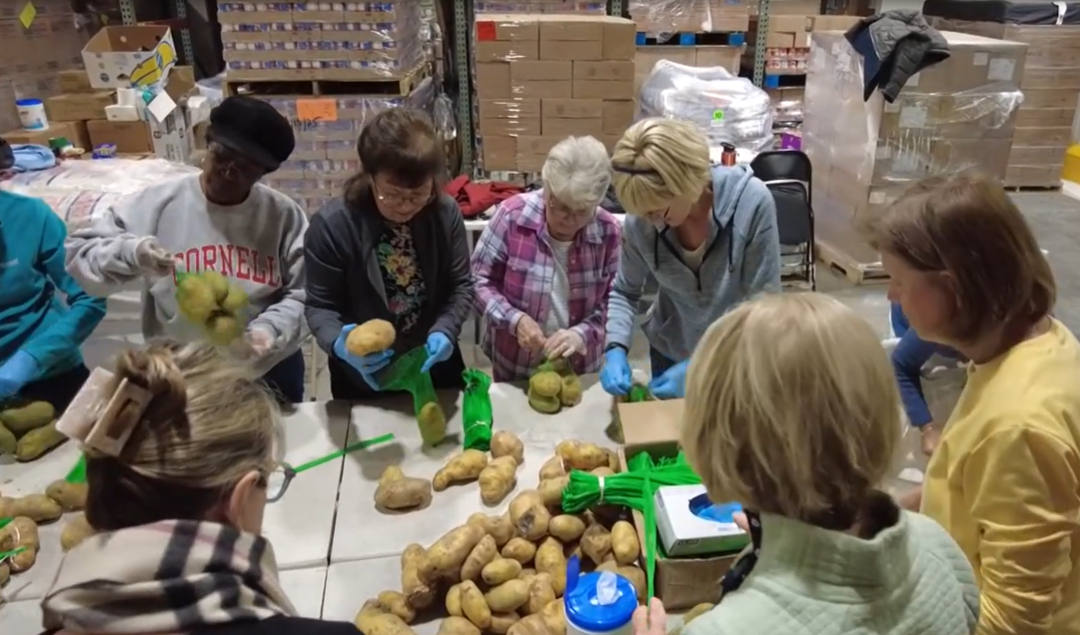
None of this works without volunteers. WINK News spoke with Bob Stewart, a food pantry volunteer who described a recent Monday serving roughly 320 families. Most of them are working people who simply don’t earn enough to cover everything.
“Volunteers are the lifeblood, honestly, of what we do,” Popper told WINK. It’s a sentiment that runs through everything at Meals of Hope. The recognition that infrastructure matters, but people power it.”
WHAT’S COMING NEXT
The new facility is one piece of a larger picture. Meals of Hope has now raised $2.8 million toward its $4.5 million Hunger to Hope Campaign, funding the long-term infrastructure behind this work. Your Neighborhood Pantry, recently launched through a grant with the Collier County Foundation, takes that commitment directly into the community as a mobile pantry where neighbors can walk through and choose the food their families actually need.
The mission hasn’t changed. The tools to carry it out just keep getting stronger.
Watch the full WINK News segment here.
To get involved or support the Hunger to Hope Campaign.
Jan 19, 2026 | Featured, In the News, Meals of Hope Information, Meals of Hope News
Access to healthy, affordable food is a basic requirement for any community to thrive. Yet for millions of people across the United States, getting to a full grocery store is not simple. It can mean miles of travel, limited public transportation, higher food prices, and fewer nutritious options. These areas are known as food deserts. They exist in large cities, small towns, farmworker communities, and rural regions.
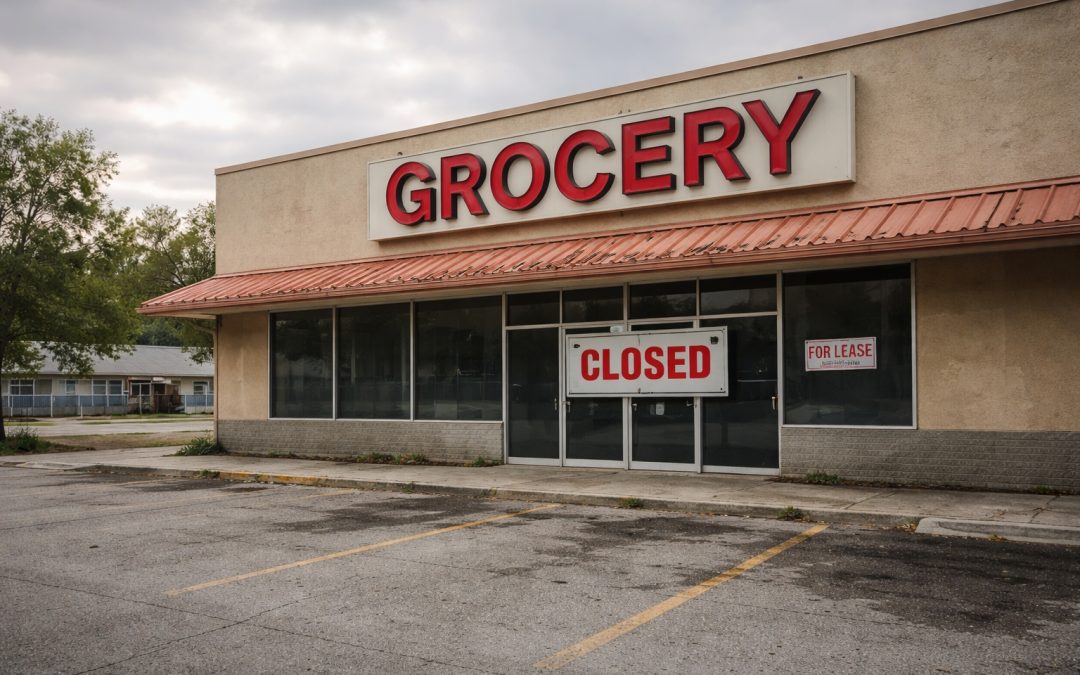
The recent closure of the only major supermarket in Immokalee, Florida brings this issue into sharp focus. When a single store shuts its doors, a community can lose more than a shopping option. It loses a lifeline. The situation unfolding in Immokalee is an example of what food deserts look like close to home and why organizations like Meals of Hope play a critical role in filling the gap.
What Is a Food Desert and Why It Matters
A food desert is a community where residents have limited access to a full-service grocery store that sells fresh produce, protein, dairy, and other basic staples. Distance plays a major role. Households without a car are especially vulnerable when the closest grocery store is many miles away. Smaller convenience stores or corner markets may carry food, but often at higher prices and with fewer fresh items.
The impact reaches far beyond inconvenience. Studies have shown that a lack of access to nutritious food contributes to higher rates of diet-related illness, including diabetes and heart disease. Limited food access also increases the financial strain on households already managing rising costs for rent, transportation, and healthcare.
When families are forced to buy food at smaller stores with higher prices, their budgets stretch even further. This ripple effect can destabilize entire neighborhoods.
Food deserts are not rare. National research shows that millions of Americans live in communities where securing healthy food requires long travel or paying significantly more for basic items. For people working multiple jobs, caring for children, or managing unreliable transportation, accessing a grocery store becomes a daily challenge.
A Closer Look: Immokalee, Florida
Immokalee, a farmworker community in Collier County, has lived this reality for years. In October 2025, that reality became even more stark. Winn-Dixie, the community’s only full grocery store, closed its doors. The closure left thousands of residents without a reliable local place to buy fresh food.
Local reporting describes the deep concern felt across the community. Without a full grocery store, many residents now rely on small bodegas or convenience stores. Prices are higher and fresh items are limited. A dozen eggs can cost several times more than the price available in larger supermarkets outside the area. Many families, already managing tight budgets, simply cannot afford this shift.
Transportation adds another layer. For some, the closest supermarket is now many miles away. Residents may need to take multiple bus rides to reach larger stores. Buses may not run frequently enough to make the trip practical. Parents with small children face added difficulty carrying multiple bags of groceries on long bus routes.
While a new store may eventually open, the timeline is unclear. In the meantime, Immokalee has become a food desert in a very real sense. The closure of one store created a community-wide disruption, and local organizations must now find ways to bridge the gap.
How Meals of Hope Is Responding
This is the type of challenge Meals of Hope is built to address. The organization recently opened a new 18,000-square-foot distribution center in Naples with approximately 9,000 square feet of cold storage. This investment in regional infrastructure is already making a measurable difference in how quickly food can reach communities like Immokalee.
The expanded cold storage allows Meals of Hope to bring in truckloads of fresh produce, dairy, and frozen protein. This capacity is critical for food deserts. When communities lose access to full grocery stores, they lose access to the foods that require refrigeration. The new facility gives Meals of Hope the ability to keep these foods safe, move them quickly, and distribute them at scale.
Meals of Hope operates multiple mobile and choice food pantries in Immokalee, including weekly locations that serve hundreds of families. Mobile distribution is especially important in food desert regions because it eliminates transportation barriers. Instead of asking families to travel miles to a full store, Meals of Hope brings food directly into neighborhoods.
Programs include a mix of fresh produce, milk, eggs, frozen meats, and pantry staples. Families receive a consistent supply of food that aligns with healthy meal planning, not just shelf-stable items. With the help of regional partners, Meals of Hope also shares truckload quantities of food with other pantry operators. This helps strengthen the collective response across Southwest Florida.
In periods of heightened need, such as the recent SNAP benefit delays and the rising cost of groceries, the ability to scale quickly becomes even more essential. Meals of Hope uses its cold storage capacity and distribution network to respond immediately. When the Winn-Dixie closed, Meals of Hope increased its support in Immokalee so families did not face the full impact of the food desert overnight.
What You Can Do
Food deserts require community-wide solutions. While infrastructure like new grocery stores takes time, local organizations can respond right now with practical, high-impact support. You can be part of that response.
Volunteer.
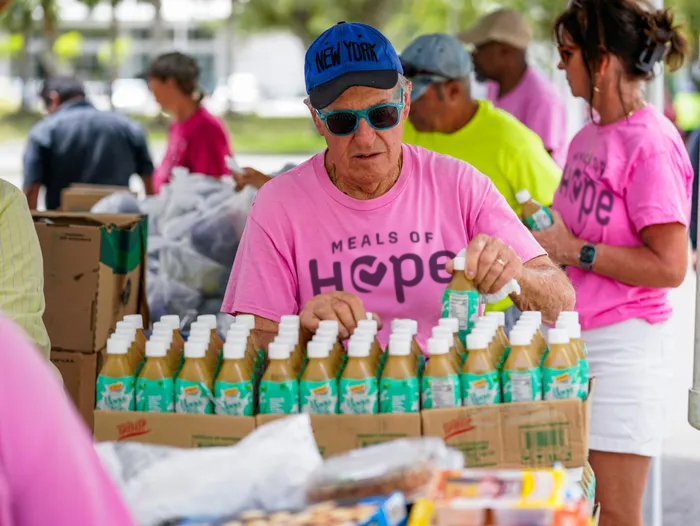
Join a mobile pantry distribution or participate in a meal packing event. These events supply thousands of meals at a low cost and provide immediate relief to communities without consistent food access.
Donate.
Funding helps purchase fresh produce, dairy, and protein. These items are the hardest to access in a food desert and have the greatest impact on family health.
Partner.
Businesses, schools, civic groups, and faith communities can host packing events or support mobile pantry operations. Partnerships help sustain the scale needed to serve food desert regions like Immokalee.
Even when a grocery store closes, a community does not need to be left behind. With local support, organizations like Meals of Hope can continue bringing healthy food directly into neighborhoods where access is limited.
Keeping Families Connected to Healthy Food
Food deserts often begin with a single grocery store closure, but the impact reaches across entire communities. Immokalee offers a clear example of what happens when access disappears and how quickly the need intensifies. Families pay more for less food, transportation becomes a barrier, and fresh options become scarce.
Meals of Hope is committed to ensuring that families in Immokalee and across Collier County do not face these challenges alone. By investing in cold storage, expanding mobile pantry outreach, and building strong partnerships, Meals of Hope is helping fill the gap that food deserts create. Community support makes this possible.
Together, we can make sure that no family is left without access to healthy food when the grocery store closes at home.
FAQ: UNDERSTANDING FOOD DESERTS AND COMMUNITY FOOD ACCESS
What is a food desert?
A food desert is a community where residents have limited access to full-service grocery stores that offer fresh, affordable food. Families often rely on smaller stores with higher prices and fewer healthy options.
What causes a food desert?
Food deserts develop when grocery stores close, transportation options are limited, or retailers find it difficult to operate in low-margin or rural areas. Economic conditions and population density also play a role.
How do grocery store closures affect a community?
When a supermarket closes, families pay more for basic groceries, lose access to fresh produce and protein, and often travel long distances to find affordable options. The impact can be immediate and widespread.
Why is Immokalee considered a food desert now?
With the closure of its only full grocery store, Immokalee residents are left with small bodegas and distant supermarkets that require long bus rides. Fresh food is harder to access and significantly more expensive.
How do food deserts impact health?
Limited access to nutritious foods can increase rates of diabetes, heart disease, and other diet-related illnesses. Families often rely on processed or shelf-stable foods when fresh items are unavailable or too expensive.
What foods are most limited in a food desert?
Fresh produce, dairy, meat, and frozen protein are the hardest to access. These items require refrigeration and stable supply chains, which smaller stores may not offer consistently.
What is the difference between a food desert and food insecurity?
A food desert refers to poor access to healthy food due to location. Food insecurity refers to lack of food due to affordability. Many communities experience both at once.
How is Meals of Hope addressing food deserts?
Meals of Hope brings fresh food directly into underserved communities through mobile and choice pantries. The new warehouse and cold storage allow for fast distribution of produce, dairy, and protein.
Why are mobile food pantries effective?
Mobile pantries remove the transportation barrier. They bring healthy food into neighborhoods that have no grocery stores nearby, making access more reliable and consistent.
Can mobile pantries fully replace a grocery store?
Mobile pantries cannot replicate a full supermarket, but they provide essential relief by supplying fresh foods and staples that families cannot easily buy elsewhere.
How can individuals help communities facing food deserts?
You can volunteer at local distributions, host a meal-packing event, or donate to help purchase fresh food. Supporting organizations with strong local presence makes an immediate difference.
How can businesses support food access solutions?
Businesses can sponsor meal-packing events, contribute financially, or organize volunteer groups. Corporate involvement strengthens community outreach and expands the reach of mobile pantry programs.
Nov 13, 2025 | Uncategorized
Southwest Florida charities and volunteers work together to ensure no one faces the season alone or empty-handed
Courtesy of Florida Weekly Fort Myers
For many families, the holidays bring both joy and anxiety — a season of giving that can quickly strain already-tight budgets. Between gift lists, grocery bills and holiday décor, the pressure to make the season “merry and bright” can feel overwhelming. But volunteers and local Southwest Florida organizations and community programs are stepping in to help, reminding residents that the holidays don’t have to be expensive to be meaningful and to provide much needed resources, especially food assistance.
Solutions Money Management Founder and Lead Financial Advisor Michael Conticelli, who serves clients in Southwest Florida, says he does provide guidance with families who want the perfect holiday albeit money might be tight.
“Even those who aren’t necessarily struggling can celebrate without spending beyond their means,” according to Conticelli. “A few ideas I’ve shared with clients and try to follow myself include planning experiences over things. One of my favorite photos is of my two boys, about 20 years ago, running down the beach on Christmas Day in Santa hats. It was a beautiful day, and that simple moment is one of the best holiday memories.”
Conticelli also advises clients to set spending limits that feel right, not arbitrary budgets. “This applies year-round. Priorities are important here. Decide what matters most. Maybe it’s a big, wonderful meal but modest gifts, or bigger gifts but simple decorations,” he believes. “The goal is to be intentional with your spending. Start next year’s holiday fund in January. Even a small amount regularly makes the next holiday season easier. Don’t aim to just spend less, but to spend better.”
A gifting tradition Conticelli started with his wife Cheryle their first Christmas as kept the focus on meaning rather than materialism. “We gave each of our boys three gifts inspired by the three wise men. It became a simple tradition that helped us teach gratitude and perspective, and it’s something we’ve carried through every holiday since,” he describes.
For holiday events, Conticelli suggests celebrating what’s free and local. “Create fun times and memories without big bills,” he said. Many cities from Cape Coral to Naples have a free tree lighting celebration and lighting of the menorah for Hanukkah to help residents get into the holiday spirit.
Even as families look for ways to stretch their dollars, thousands of neighbors face the ongoing reality of food scarcity. Community groups and volunteers are meeting that need, providing meals and resources during the holidays — and long after the decorations come down.
According to Community Cooperative & Meals on Wheels of SWFL Chief Executive Officer & President Stefanie Ink Edwards, the need for providing food assistance has never been greater.
“One in seven Floridians and one in five children face hunger daily. In Southwest Florida alone, more than 46,000 children are food insecure,” she conveys. “At Community Cooperative, we know the power of what’s possible when a community comes together. Whether you give, volunteer, or host a food drive, your support directly changes lives. Together, we can ensure no child, senior or family goes hungry.”
Community Cooperative has remained steadfast in its mission to end hunger and homelessness in Southwest Florida through a network of innovative programs including Meals on Wheels of Southwest Florida, its Community Café, its Mobile Food Pantries, Market on Wheels, and its newest initiatives like Market on Demand and the Mobile Hot Food program.
“Every day, we’re meeting people where they are with food, compassion and a path toward stability,” she said. “Rising costs, inflation and lingering impacts from hurricanes have pushed many families and seniors to the breaking point. We’re seeing more first-time visitors than ever – people who never imagined they’d need help putting food on the table.”
Edwards reflects that seniors on fixed incomes are choosing between medication and meals, and working parents are struggling despite full-time jobs. “The demand for food and essential services is at an all-time high, and our team is responding with compassion, innovation in our programs, and unwavering commitment to offer hope,” she adds.
This holiday season Edwards offers advice to families struggling to afford food, holiday décor, gifts or clothing.
“First, know this, you are not alone. Reaching out for help is not a sign of weakness, it’s an act of courage and there are so many organizations out there to help,” she continues. “We encourage families to embrace the heart of the season, togetherness. Simple and cost-effective traditions and shared moments often create the most meaningful memories. And when possible, connect with organizations like ours for help with food, clothing and even holiday support.”
The holidays are one of the most meaningful times at Community Cooperative. “Through programs like our Full Plates Project for Thanksgiving and Adopt-a-Family and Adopt-a-Senior for Christmas, we ensure that everyone, regardless of circumstance, can experience the joy and dignity of the holiday season,” Edwards described. “Volunteers help us serve meals, sponsor families, and host food drives, creating a beautiful reminder of what makes this community so special, people coming together to care for one another.”
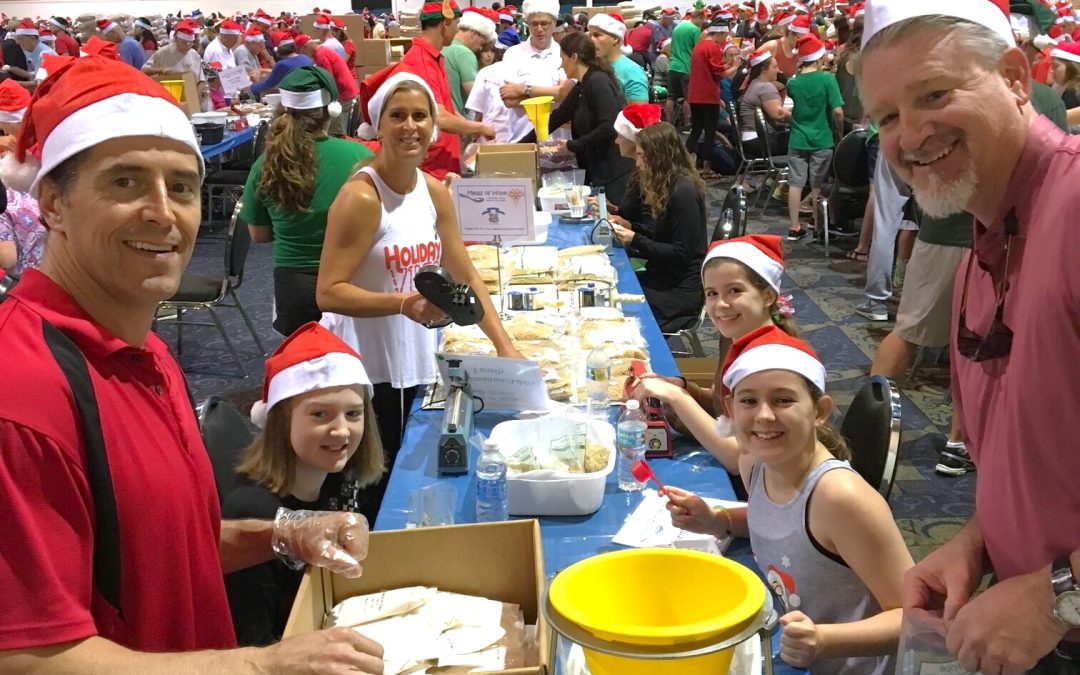
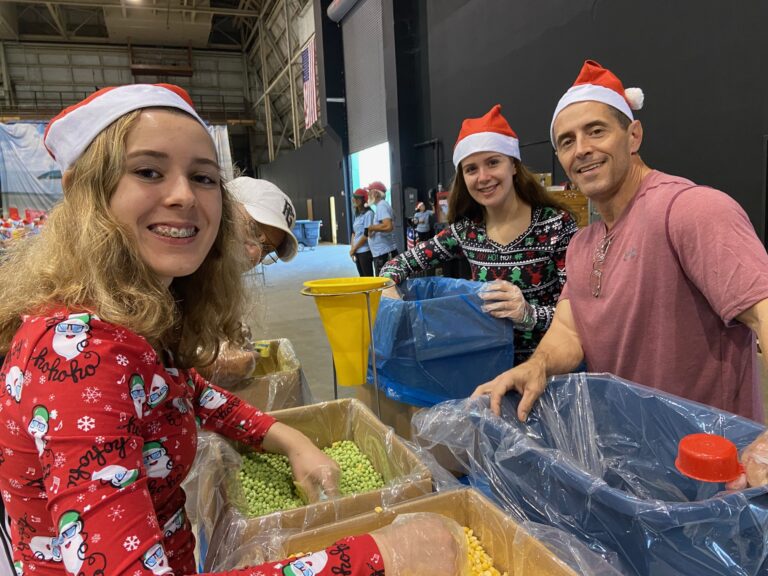
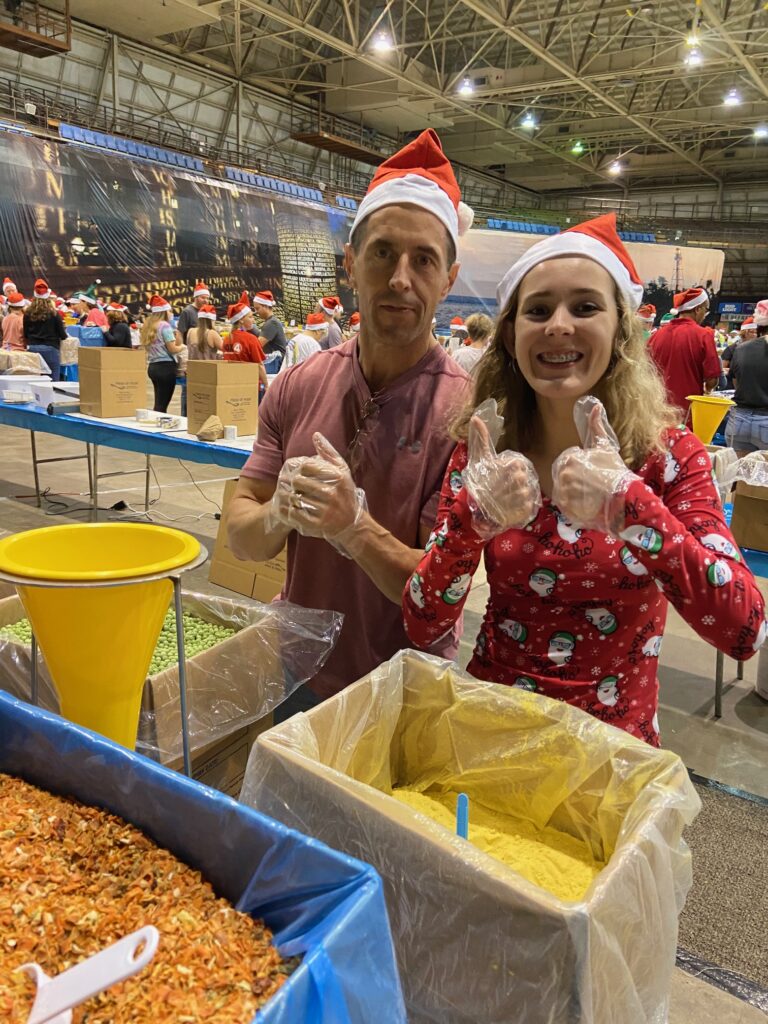
Cape Coral resident and Optavia Health Coach Kelly Thomas, who has been a multi-year volunteer for Naples-based Meals of Hope’s Holidays without Hunger event explains her family was introduced to this serving opportunity more than 10 years ago through her then homeschool community at Classical Christian Academy.
“We volunteered four years in the Meals of Hope’s Holidays Without Hunger Event at the Lee Civic Center after being introduced us to this beautiful event and organization’s mission to provide meals for the less fortunate,” Thomas recalls. “The event is so fun and incredibly heartwarming. It truly ignites the Christmas spirit and captures teamwork at its best with a friendly ‘beat the bell’ competition as teams hustle in meal assembly lines for points with every box collectively packed, sealed and ready to be shipped.”
Thomas believes the calling and needs to help others is just as great every year because there will always be people who need others to rise up and lend a hand.
“It’s our duty and privilege to help those less fortunate,” Thomas affirmed. “Our family continues to be called every year to help families in need with this particular cause mostly because we are a Catholic family rooted in Christ and strive to help the poor and hungry with this type of servant heart work. And what better time than the holidays to be charitable with our time and generosity.”
The City of Naples has officially recognized Meals of Hope’s impact with a proclamation naming November 2025 as Meals of Hope Month, according to the organization’s website. “This reflects our commitment to hunger relief, including the 13.6 million meals we distributed in 2024,” as noted on the site.
Dietician Gisela Bouvier, CEO & Founder at Gisela Bouvier Nutrition, based in Punta Gorda, Florida, recommends ways to save money at the grocery store this holiday season including using Artificial Intelligence (AI) as a cost savings tool.
“If unsure what to cook for the holiday or having minimal ingredients left in your fridge, freezer, and pantry, use AI to help you create different recipe and meal ideas,” Bouvier suggests.
Be prepared to adapt your menu, Bouvier cautions. “Buying canned or frozen produce can help you save money. For example: If your recipe calls for cooked tomatoes, consider buying canned tomatoes or frozen green beans instead of fresh,” she describes. “Whether you’re making the entire holiday meal or just one item, going to the store with a list and only purchasing the items you need will help save on the total bill.”
She also suggests knowing how to find additional savings through coupon and reimbursement apps to save money or get cash back. Publix offers its BOGOs and has digital coupons available for additional savings.
“If you are seeking particular ingredients for your holiday meals, don’t be afraid to shop around – search which stores may have your items at more affordable prices,” Bouvier adds.
When preparing the holiday meals, Conticelli recommends cooking for the right number of people, not the refrigerator. “We love holiday leftovers, but most families buy enough food for 10 when they’re feeding five. A smaller, well-planned meal saves money and avoids waste,” he outlines. “Plan it when you’re full. No one wants ‘leftovers of leftovers’ on day three.”
Saving money is one way to ease the stress of the season — but for those in a position to give, the holidays also offer a chance to make a difference. Local organizations are collecting turkeys, canned goods and gift items to help neighbors who might otherwise go without.
This holiday season, there are ways individuals can help alongside numerous community organizations that are helping those in need including the Gladiolus Pantry located in Fort Myers, which has a mission to reduce hunger by providing healthy, nutritious food while treating everyone with dignity and respect.
Director and Founder of Gladiolus Food Pantry Miriam Ortiz said she is witnessing an increase in food necessities in the community compared to past years and her organization
“Other pantries have been closing in the surrounding community due to the government shut down. Without food donations we are barely able to keep up with the increased demand ourselves,” she adds. “Our pantry is in need of food donations due to the increased volume of people that are suffering from food scarcity.”
Stepping up to ensure community members have the items for a fruitful holiday season is a key initiative for Gladiolus Food Pantry. “We do special events for Thanksgiving and Christmas for our local community. We hand out a turkey and all the fixings to those that do not have the means to secure a thanksgiving dinner for their family,” she continues. “For Christmas we hand out toys to those in need of gifts for their children.”
Another way to help is by supporting the Harry Chapin Food Bank of Southwest Florida in its first ever Thanksgiving turkey and ham drive through Nov. 20.
“This year we are hosting our first-ever Thanksgiving Turkey & Ham Drive, now through November 20. The community can drop off frozen turkeys or hams at our Fort Myers or Naples locations, and monetary donations are deeply appreciated through our online campaign,” said Harry Chapin Food Bank of Southwest Florida’s Director of Communication & Marketing Irma C. Lancaster. “Every contribution helps make a family’s table a little fuller this holiday season, especially for those struggling due to the ongoing shutdown.”
Harry Chapin Food Bank’s mission is to lead its community in the fight to end hunger by serving children, families, seniors, and individuals across Charlotte, Collier, Glades, Hendry and Lee counties, ensuring that no neighbor goes hungry.
“This year, our focus is on helping families meet their most essential need, food. Anyone in need of assistance can visit harrychapinfoodbank.org/food-locator to find nearby pantries and mobile distributions,” Lancaster says. “We want families to know that they are not alone and that help is available.”
Each donation — whether a turkey, a toy or a few dollars — helps fill a neighbor’s table and bring warmth, comfort and connection to homes that might otherwise go without.
“We’re here to lift one another up especially during the holiday seasons,” Edwards added.
RESOURCES:
Community Cooperative & Meals on Wheels of SWFL
Gladiolus Food Pantry:
- Website: gladiolusfoodpantry.org/
- Accepting food donations Mondays & Tuesdays from 9am-3pm and Wednesdays from 9am-6pm.
- Address: 10511 Gladiolus Dr., Fort Myers, FL 33908
Harry Chapin Food Bank of Southwest Florida
- Website: harrychapinfoodbank.org/
- Accepting donated turkeys and ham for Thanksgiving drive through Nov. 20th.
- Address: 3760 Fowler Street, Fort Myers, FL 33901-0930
- Address: 3940 Prospect Ave., #101, Naples, FL 34104-3745
Meals of Hope