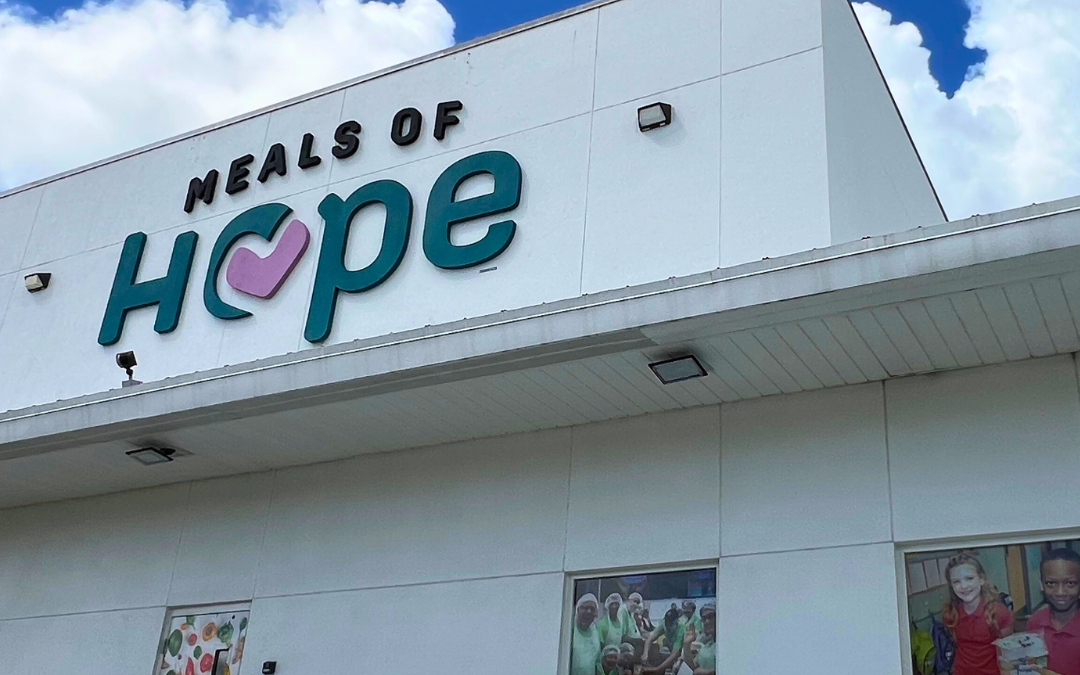
Meals of Hope is stepping up its fight against hunger in Southwest Florida with a new 18,000-square-foot facility in Collier County.
The organization celebrated the opening of its massive warehouse on Mercantile Avenue, just outside the city limits of Naples. This expansion is set to revolutionize how Meals of Hope serves the community by significantly increasing its capacity to store and distribute fresh and frozen foods.
Steven Popper, president and CEO of Meals of Hope, highlighted the impact of the new facility.
“We were only able to store a truck, maybe, or a little less than a truckload of produce,” said Popper. “Now, we can store about 20 or 30 truckloads of produce at one time.”
The new warehouse allows Meals of Hope to shift from providing primarily canned goods to offering more nutritious options like fresh produce and frozen items.
“Food pantries gave out lots of canned goods, but we are definitely shifting away from that model to more fresh produce and frozen items,” said Popper. “Now that we have this 9,000 square foot worth of space, we’re able to take advantage of it.”
The organization is also responding to the immediate needs of the community by opening two additional pop-up pantries in Immokalee this week. This move comes in response to the closure of a local Winn-Dixie, which has affected access to affordable groceries in the area.
“We traditionally serve about 4,000 families every week,” said Popper. “But because of what’s happening in the community right now, we are having two pop-up food pantries. Just this week in Immokalee, our expectation will serve 650 families with just those two pantries.”
In addition to these efforts, Meals of Hope is launching its first capital campaign, Hunger to Hope, aiming to raise $4.5 million. The funds will help ensure the organization can continue to provide for the community, especially during times of increased need. Meals of Hope has already been serving the community for 18 years, now distributing over 1 million pounds of food each month.
The new facility not only enhances Meals of Hope’s ability to store and process food but also positions them to respond more effectively to emergencies, such as natural disasters and supply chain disruptions. This expansion marks a significant step forward in their mission to combat hunger and support families in need.
For more information on how to support Meals of Hope and their initiatives, visit the official website.
SNAP Benefits Cut: What It Means for Families, And How Meals of Hope Is Responding
On July 4, 2025, President Trump signed the One Big Beautiful Bill (commonly called the “Big, Beautiful Bill”) into law. While it included major tax cuts, the legislation also enacted the largest SNAP benefits cut in U.S. history, implementing sweeping changes to the Supplemental Nutrition Assistance Program (SNAP).
SNAP (formerly known as food stamps) serves over 42 million people as of March 2025. Here are some of the changes under the new law:
SNAP funding is reduced by roughly $186 billion over the next decade, slashing 20% of federal assistance.
Eligibility rules tighten with expanded work requirements for people up to age 64, including adults aged 55–64 and parents of older children.
Exemptions have been removed for veterans, homeless individuals, and young adults leaving foster care.
Starting in 2028, states will cover up to 75% of administrative costs of SNAP, plus a share of food benefit costs if error rates exceed 6%, which will likely cause states to eliminate SNAP benefits for citizens.
How Families Will Be Impacted By SNAP Benefits Cuts
According to the Urban Institute, about 22.3 million families, including 3.5 million working households, will lose at least some SNAP benefits. Of those, 5.3 million families will lose at least $25 monthly, averaging a $146 monthly cut.
The impact reaches:
Working parents who may have trouble meeting stricter reporting rules
Older adults and seniors on fixed incomes
Children who depend on SNAP partly to qualify for school and summer meal programs
Already, state officials warn that preemptive benefit reductions and administrative delays could begin before the official 2028 deadline.
The Local Reality of SNAP Benefits Cuts
For families, these changes often translate to skipped meals, reliance on cheaper, less nutritious food, and mounting financial pressure. The economic impact doesn’t stop there; each SNAP dollar typically generates $1.54 in local economic activity, meaning local grocers, farms, and producers will also feel the strain.
As government support shrinks, nonprofits and food banks are bracing for increased demand and preparing to respond.
Meals of Hope Support in Action
At Meals of Hope, we’re planning on meeting the moment. Here’s what our support looks like:
Our 15+ mobile and fixed food pantries serve more than 4,000 families every week across Southwest Florida. These locations provide access to fresh produce, pantry staples, proteins, and our packed meals. Our mobile food pantries bring food directly into neighborhoods where transportation is limited.
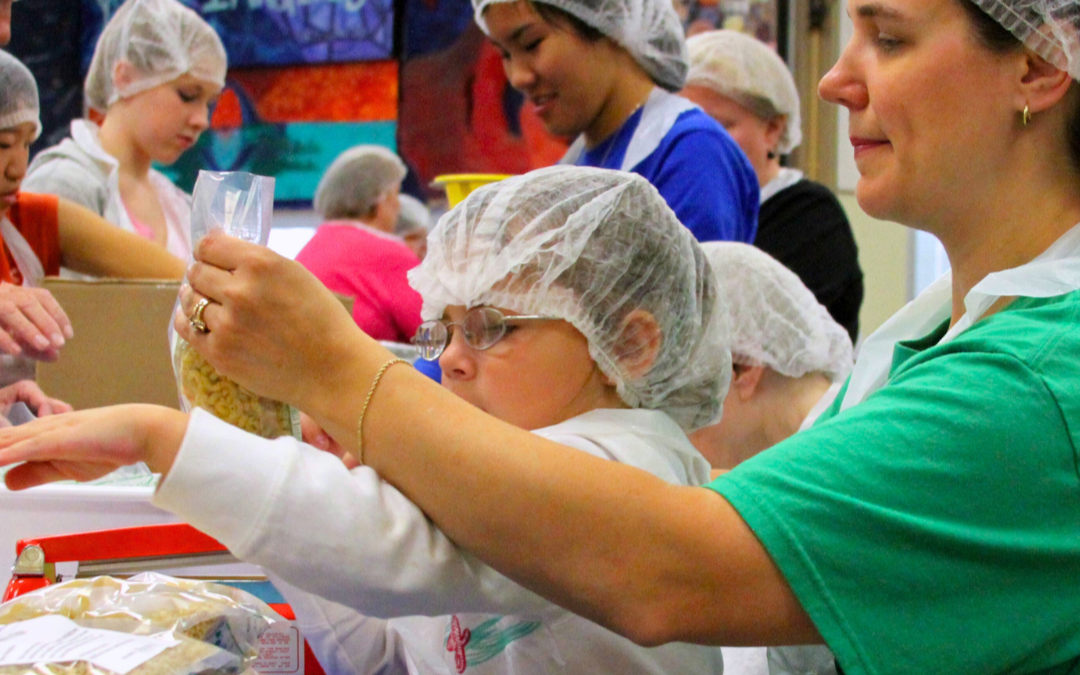
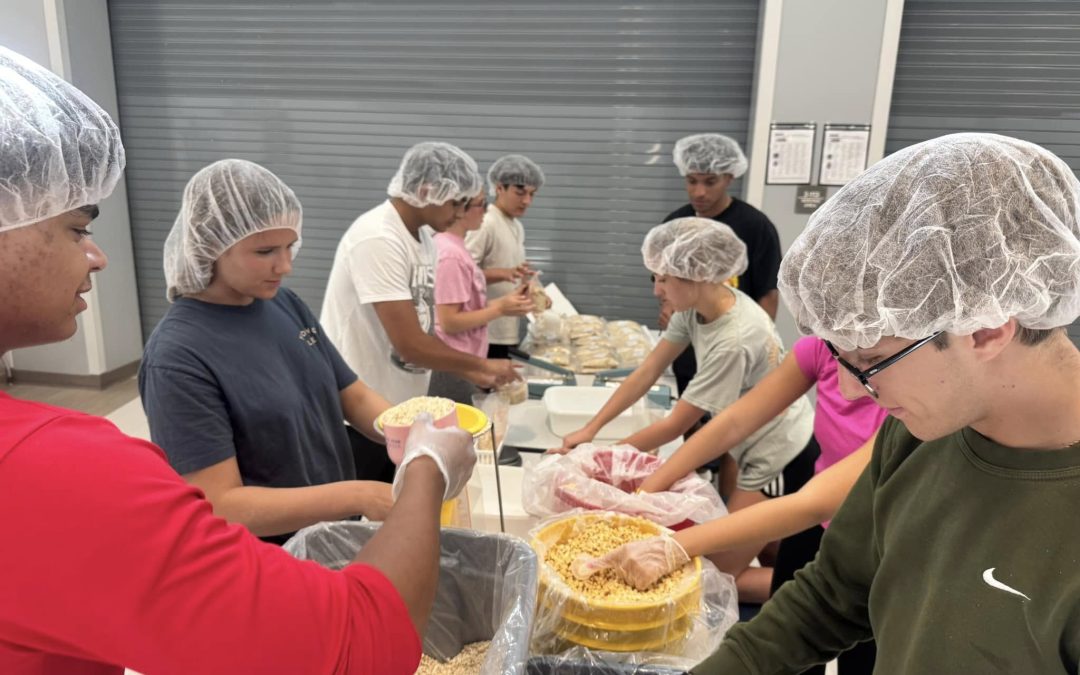
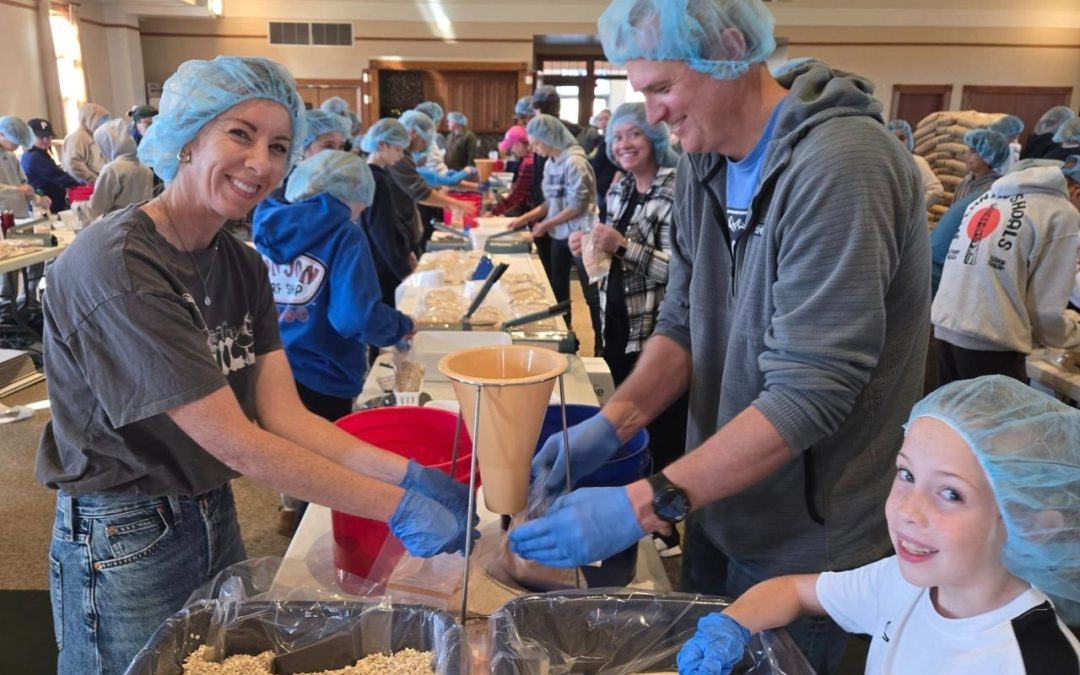
We’ve packed over 100 million meals at meal packing events across the country, and we’re ramping up efforts to meet growing demand. Our meal packing events bring together volunteers of all ages, creating fast-paced, hands-on opportunities to fight hunger.
Partnerships power everything we do. From local schools and faith groups to corporate sponsors and business owners, these relationships help us fund events, stock pantries, and expand access to food. Whether it’s hosting a meal-packing event, sponsoring mobile pantry stops, or helping us reach underserved areas, our partners make a direct, lasting impact.
Our mission is simple: feed families in need, no matter the policy climate. And with every packed meal and every helping hand, we’re doing just that.
Why Your Help Matters Now
These SNAP benefit cuts reduces food assistance AND puts more pressure on communities to fill the gap. The responsibility to keep families fed is shifting to local organizations, and we’re ready to lead the charge.
Here’s how you can help:
Donate: Just a little over a quarter covers one meal. Every contribution helps provide food for children, seniors, and working families.
Volunteer: Help pack meals, stock shelves, or support one of our mobile pantry distributions. Whether you’re coming as an individual or bringing a team, we’ll put you to good use.
Partner: Businesses and organizations should consider hosting a meal-packing event. We handle the logistics, you get to make a hands-on impact in your own community.
Your support helps us stay steady, responsive, and effective, even as national programs pull back. Together, we can reach more people with nutritious food and a message of hope.
Let’s Feed Families in Need
The policies may change. The need may grow. But our mission hasn’t. At Meals of Hope, we believe no child should go to bed hungry. Every parent deserves the dignity of providing for their family. And when neighbors come together, real change is possible. If SNAP benefit cuts leave families with fewer resources and emptier plates, we’ll be there with healthy meals, helping hands, and a community that cares.
And if you’re looking for a way to make an even bigger impact, Meals of Hope supports and offers franchise opportunities for people who want to bring this mission to their own community. When you lead a local effort, the impact doesn’t stop with the meals. It grows, connecting more families, volunteers, and partners in the fight against hunger. Learn more here.
In many homes, summer means more light, more movement, and more time together. But for families facing food insecurity, it also brings pressure, especially when access to summer meals for kids disappears as school meal programs end. When the school year ends, so do the breakfast and lunch programs that fill two of a child’s daily meals. That gap is real, and for millions of children, it can mean long hours without enough to eat.
During the school year, over 20 million students across the country depend on free or reduced-price meals provided through their schools (Feeding America). These meals are often the most reliable source of nutrition a child receives. When summer break arrives, parents are left to replace those meals, often without the time, income, or resources to do so.
That need is what drives the work of Meals of Hope every summer. Our mission is not seasonal, but summer brings sharper urgency. We respond by expanding food access where it’s needed most and removing as many barriers as possible
SUMMER HUNGER LOOKS DIFFERENT
Hunger in the summer isn’t as visible as it is in December fundraising drives. It hides in plain sight, behind kids hanging out at rec centers, teens skipping meals without saying why, and families turning down summer camps because they can’t cover snacks.
Parents aren’t always reaching out for help. Many don’t know where to go. Others worry about stigma. But when we bring food to the places they already are, rec centers, faith groups, housing communities, we remove the friction. The help becomes part of the day instead of a separate task.
HOW MEALS OF HOPE WORKS IN THE SUMMER
Our approach is simple: get food to kids as directly as possible. That means scaling up three key strategies during the summer months:
Mobile Pantries
Mobile food pantries travel into neighborhoods with high food insecurity. These pantries are stocked with a mix of shelf-stable items and fresh produce when available. By coming directly to the communities we serve, we reduce the transportation barrier that often limits access.
Community-Based Distributions
We work with trusted partners like churches, recreation centers, housing organizations, and schools to host food distributions throughout the summer months. These locations are familiar to families and often serve other community needs, making it easier for parents and children to attend without stigma.
Meal Packing Programs
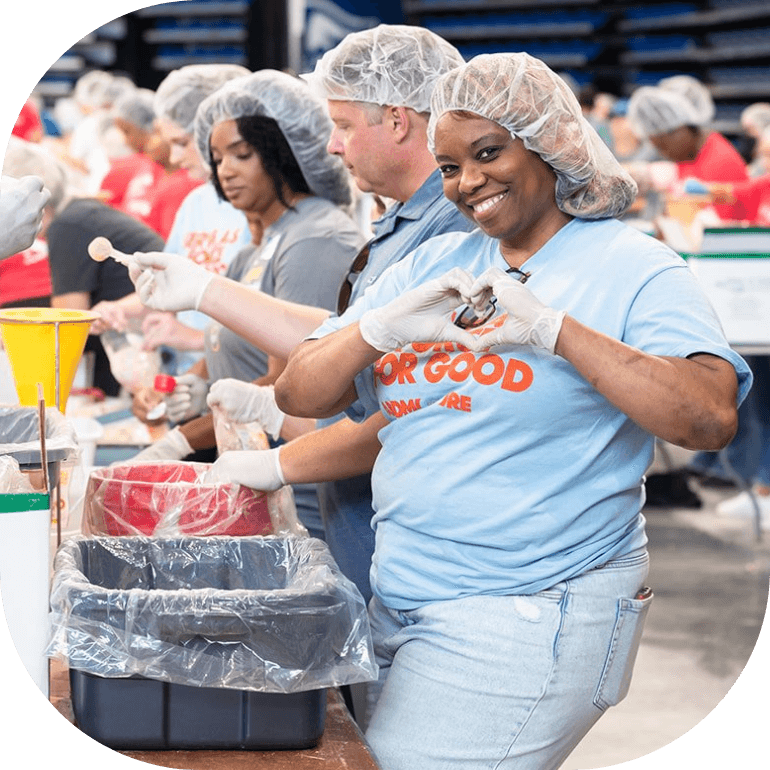
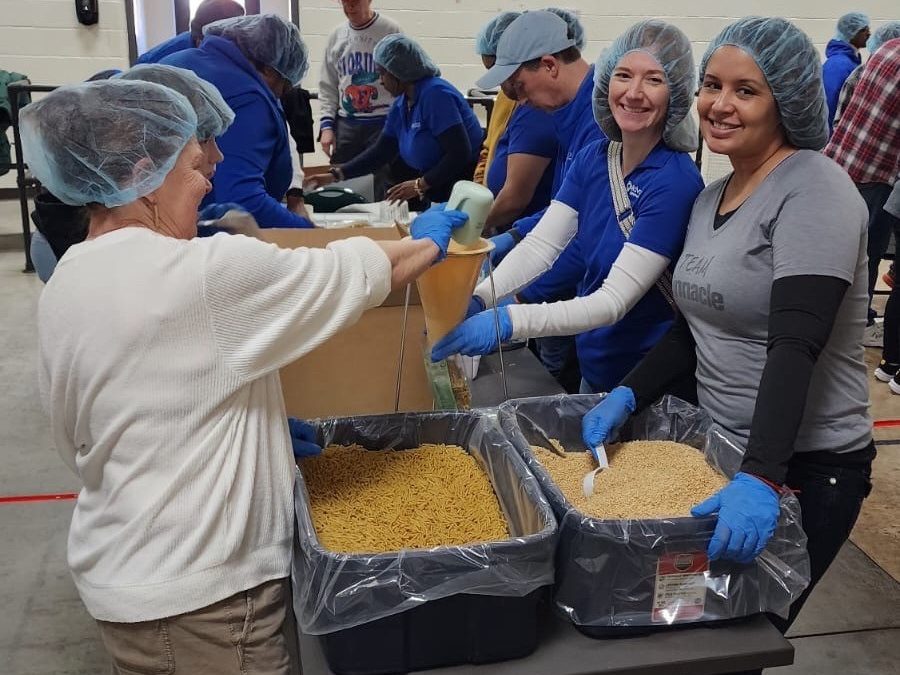
Volunteers from all walks of life come together at meal packing events to prepare thousands of meals in a short time. These shelf-stable meal packs are designed for efficiency, nutrition, and long-term storage. Most are distributed locally, staying within the regions where they’re packed.
Each of these approaches works because we build them on trust, consistency, and community input. Rather than asking families to navigate complex systems, we simplify the experience by bringing food directly to the people who need it.
WORKING ALONGSIDE SUMMER EBT AND PUBLIC PROGRAMS
We also support families in navigating additional summer meal resources. When available, programs like summer EBT benefits help families stretch their food budgets. While not all states or families are eligible, we encourage those who qualify to use these programs alongside Meals of Hope’s services. By combining public and nonprofit resources, we strengthen the safety net.
A CHILD’S SUMMER SHOULD NOT BE DEFINED BY HUNGER
The goal of our summer programs is not just to deliver food. It’s to protect a child’s chance to have a healthy, active, and joyful summer. When children are well-fed, they can learn, move, and participate fully in the world around them. They are more likely to thrive, not just survive.
At Meals of Hope, we believe hunger has no place in a child’s life, no matter the season.
WHAT MAKES THIS WORK POSSIBLE
Meals of Hope relies on the people behind the mission. Volunteers who give their time. Donors who provide financial support. Partners who open their doors and share their spaces. This collective effort is what powers every meal distributed.
Every packed box. Every restocked truck. Every pantry stop. None of it happens without individuals and communities stepping up.
HOW YOU CAN GET INVOLVED
If you’re looking for a way to support children and families this summer, there are several ways to make a real impact:
Volunteer at a meal packing event. These are efficient, hands-on, and open to people of all ages and backgrounds.
Host a food distribution site if you manage a school, church, or community center.
Donate to fund meal ingredients, transportation, and logistical costs.
Share information about food access programs with families in your network.
You don’t have to do everything. Doing one thing makes a difference.
THIS SUMMER, SHOW UP WHERE IT MATTERS
Hunger is not loud. It doesn’t always announce itself. It can look like a quiet child, a skipped lunch, or an empty pantry. But it is real, and it doesn’t take the summer off.
Meals of Hope is here for that reason. We’re present in the neighborhoods where help is needed. We’re working with the people who live there. And we’re building programs that not only feed kids, but also respect and support their families.
This work continues because it has to. Because meals can’t wait until September. Because summer should be a time for growth, not for going without.
Let’s make sure every child has what they need to enjoy summer fully. Join us. Support summer meals for kids by donating, volunteering, or sharing resources with your community.
Each April, we pause to recognize one of the most powerful forces for good in our communities: Volunteers.
First established in 1974, is more than just a week on the calendar. It’s a celebration of the compassion, generosity, and selflessness that lives in people who step up, not for recognition, but to make a difference.
At Meals of Hope, we know the power of volunteers firsthand. In fact, we exist because of them.
Since our founding in 2007, over 250,000 volunteers have come together at our meal-packing events across the country, and the impact has been staggering. Together, we’ve packed and distributed over 100 million meals to individuals and families facing food insecurity both in the United States and around the world.
These are not just numbers—they represent real people helping real people. Parents bringing their kids to teach them about giving back. Coworkers stepping away from their desks to bond over a shared mission. Community groups, sports teams, churches, and schools all showing up with energy and heart.
What makes these events so special isn’t just the meals packed, it’s the connection. The laughter, the music, the sense of purpose. In just a couple of hours, strangers become teammates, and teammates become change makers.
This week, and every week, we are deeply grateful.
To our volunteers past and present: thank you. Your commitment fuels everything we do. You’re not just helping us fight hunger, you’re proving that when communities come together, hope grows stronger.
Happy National Volunteer Week, and here’s to the next 250,000.
BROOKINGS — The South Dakota FFA Association will host the 97th Annual South Dakota State FFA Convention on April 3-5 at the Dacotah Bank Center and South Dakota State University’s campus.
The convention, with the theme of “Never Settle,” will be led by the state FFA officers include President Maya Howard, Miller; Vice President Raul Berrones Pedraza, Milbank; Secretary Ethan Hendricks, Rapid City; Treasurer Bailey Weegar, Viborg-Hurley; and Reporter Hailey Kizer, Howard. The state FFA Convention is like the “state championship” of FFA, that highlights the successes of South Dakota’s FFA members.
Throughout the three-day convention, over 2,000 FFA members, advisers and guests will:
Participate in a Career Carnival with exhibits from 55 ag industry leaders and colleges
Package 55,000 meals for Meals of Hope, which will be provided to Feeding South Dakota
Attend leadership workshops hosted by First Dakota National Bank, the Agtegra Innovations Center, South Dakota Agriculture & Rural Leadership, South Dakota Beef Industry Council, Field Reveal, USDA Risk Management, Farm Credit Services of America, National FFA officer Jack Lingenfelter, National FFA Alumni, Ag Ed Ambassadors, and Caleb Weiland, former FFA member.
Showcase agricultural skills by competing in hands-on career development events in agricultural business management, agricultural technology and mechanical systems, agronomy, dairy cattle evaluation, floriculture, food science and technology, horse evaluation, livestock evaluation, meats evaluation and technology, milk quality and products, natural resources, nursery/landscape, range plant identification and veterinary science.
Four award sessions — Thursday evening, Friday afternoon and evening, and Saturday morning — will include:
Bestowing the State FFA Degree on 324 members, the highest degree of members in South Dakota FFA
Recognizing outstanding FFA members for their Supervised Agriculture Experience projects in the STARS Pageant (Star Greenhand, Star in Agriscience, Star in Agribusiness, Star in Agricultural Placement, and Star Farmer) and proficiency awards
Awarding scholarships to graduating seniors and postsecondary students studying agriculture
Hearing inspiring messages from state FFA officers, National FFA Southern Region Vice President Jack Lingenfelter of Georgia, and keynote speaker Melvin Adams
Commending members for their success in agricultural career development events, as they advance to national competition in Indianapolis this fall
Honoring supporters with the Honorary State FFA Degree and Distinguished Service awards
Thanking past state FFA officers and the FFA Foundation board
Celebrate the South Dakota FFA Family of the Year, the Mary and late Myron Williams family, from Wall.
Recognizing FFA chapters that have demonstrated outstanding involvement in building leaders, growing communities and strengthening agriculture with the National Chapter award
Installing the 2025-26 state FFA officers and ambassadors
Together, we can make a difference. If you’re attending the South Dakota FFA Convention or live nearby, come lend a hand and help Meals of Hope bring hope to the table—one meal at a time.
Can’t make this one? Explore ways to get involved in the fight against food insecurity with Meals of Hope today!